
Dr. Andrew Yates: Modeling the Immune Response
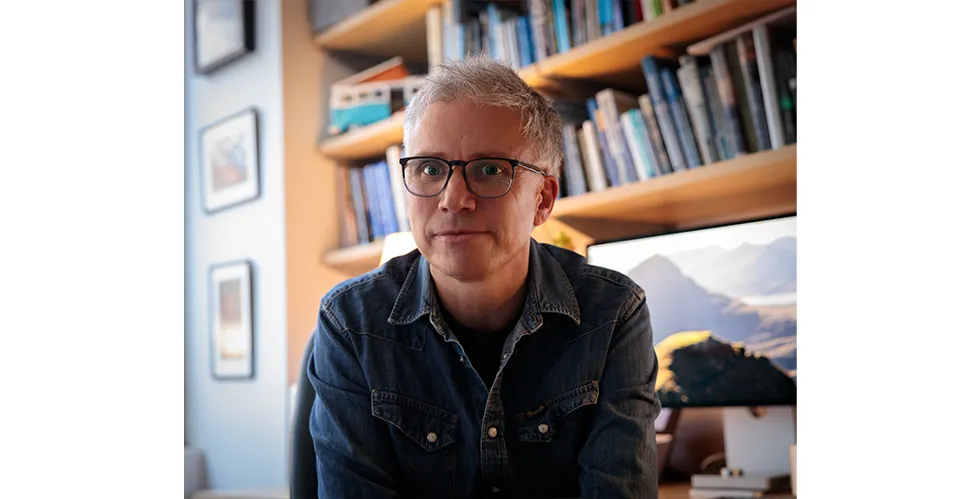
Meet Dr. Andrew J. Yates: a Professor of Pathology and Cell Biology, and a member of the Irving Institute for Cancer Dynamics, the Data Science Institute, the Herbert Irving Comprehensive Cancer Center, and the Program for Mathematical Genomics at Columbia University. Given his current affiliations, you may not expect that his academic career and early postdoctoral years were spent exploring theoretical physics and cosmology.
“I trained as a theoretical physicist and cosmologist, but had a side interest in the emergent properties of complex systems,” reflects Dr. Yates. “I can actually trace this back to being curious about the organisation of insect colonies, and bees in particular.”
Dr. Andrew J. Yates describes his introduction to T cells as “serendipitous,” learning about this class of white blood cells through an immunologist colleague he climbed with.
“This led me to see parallels with the collective behavior of populations of individuals (cells), each following relatively simple rules,” he reflects. “So that’s how I got started.”
Today, Dr. Yates’s research aims to understand immunological memory and the mechanics of fighting infections: “for example, how do these cells make decisions, and to what extent are those decisions coordinated? How are division, differentiation, and migration related?”
The Yates group approaches these questions and tests hypotheses with mathematical models. By considering snapshots of individuals at different stages of the immune response, Dr. Yates and his research team can reconstruct the response at an individual level. The rich data they gather has trained their predictive models to be highly successful.
As increasingly sophisticated computational models transform biomedical research, Dr. Yates emphasizes the importance of interpretability. “We are mindful of retaining our philosophy of working with relatively simple models of immune dynamics, which are interpretable– that is, they directly describe fundamental biological processes such as division and differentiation, that we can observe.”
Dr. Yates hopes that his research area will lead to the development of vaccines that generate long-lasting protection against infection. Further research into memory T cells in tissues such as the lungs and skin can reveal more about how T cells respond when a pathogen returns.
However, understanding these complex systems is only part of the goal. Just as mathematical models can make the hidden dynamics of an immune response more interpretable, Dr. Yates hopes the research itself can become more accessible to the broader public.
“I hope that we can make this understanding accessible, and help generate excitement about (and faith in) biomedical research in general,” he says.
While working towards this goal, Dr. Yates also aspires to collaborate with and to mentor more researchers. “Research is challenging intellectually and emotionally, and it’s important that we support each other as much as we can. Successes and insights aside, seeing people I’ve worked with thrive and move on to better things is perhaps the most meaningful part of my job.”
With his unique, nonlinear path from physics to pathology, Dr. Yates’s experiences highlight how personal interests can evolve into surprising career pursuits. His story champions the interdisciplinary spirit of the IICD and shows how unexpected collaborations– and research questions across disciplines– can lead to meaningful scientific discoveries.