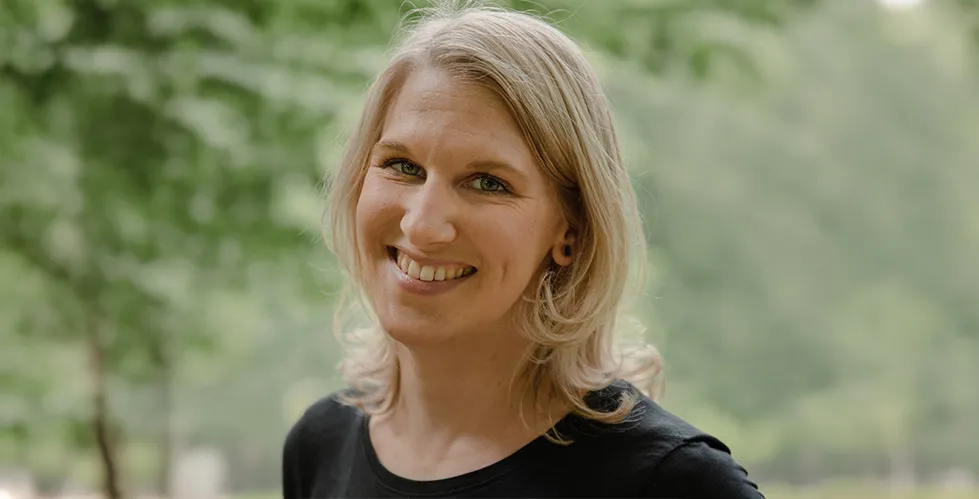
Dr. Juliane Schröter is a Postdoctoral Researcher at Columbia University’s Irving Medical Center in IICD Associate Member Andrew Yates’ research group. Her research in mathematical immunology focuses on immune responses to infection and vaccination with a growing focus on immune development in early life.
Juliane began her postdoctoral journey at Columbia after completing her PhD at Utrecht University in 2022. “Completing my PhD was a major milestone, both professionally and personally,” she reflects. “It reinforced that persistence through difficult periods can lead to meaningful success.” Since then, she has developed a strong interest in understanding how infections and vaccinations during infancy shape long-term immune function and disease risk.
“I aim to establish an independent research niche in quantitative pediatric immunology, where I aim to model the developmental trajectories of immune-cell populations and quantify how environmental exposures imprint immune maturation,” Juliane describes.
In a current project, Juliane is discovering how different parts of the immune system work together and respond to vaccines. Using COVID-19 as a model, she analyzes tissue from vaccinated organ donors, testing how immune cells across the body relate to antibody strength and quality.
Juliane finds the challenges of her research incredibly inspiring. “One of the most rewarding aspects of my research has been seeing something finally work after a long period of trial and error,” she says. “Research is rarely linear, and there have been many moments of uncertainty and setbacks along the way. What stands out most is that perseverance has paid off.”
Juliane’s growing contributions to the field have also led to professional recognition, including a recent conference where she was acknowledged by name. She describes this experience as both validating and motivating, and as reinforcing her sense of being an active and valued member of her scientific community.
Reflecting back, she also reiterates the power of collaboration, especially in her intersectional field. “You will rarely be the sole expert in a room, and that is a strength rather than a weakness,” she notes. “Others may have deeper expertise in specific aspects, while your role is to connect ideas, build models, and translate between disciplines. This ability to integrate knowledge and communicate across fields is one of the most important skills you can develop.”
As her career progresses, Juliane’s collaborative spirit and passion for quantitative research will guide advancements in pediatric immunology. Juliane is among many postdoctoral researchers who contribute to our ever-evolving understanding of disease, and we look forward to seeing her accomplishments in the future.