
Alliance Interns Reflect on their Time at IICD
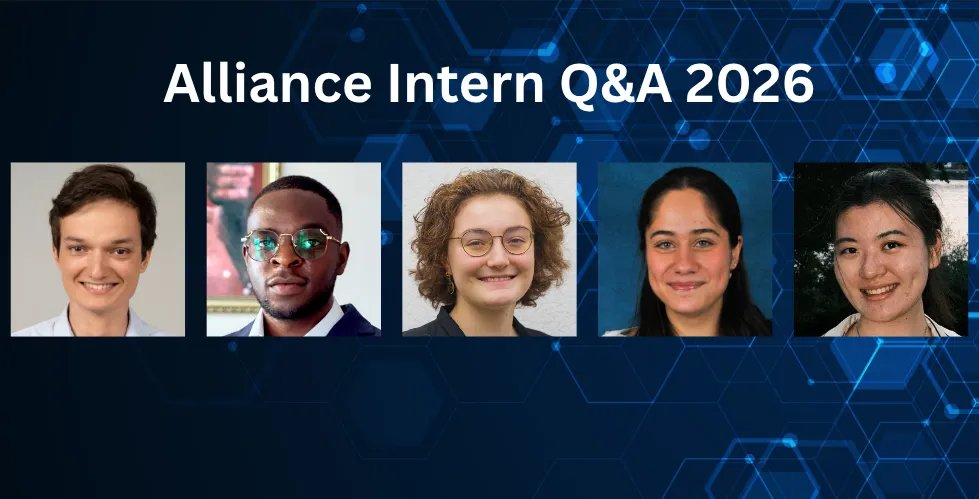
This summer, we were thrilled to once again welcome students from École Polytechnique as a part of the Alliance Program. The collaborative, joint venture provides visiting students with scientific internships at Columbia University. Since 2022, the Irving Institute for Cancer Dynamics has participated in the partnership, giving interns the opportunity to grow their experiences in interdisciplinary cancer research.
As our 2026 cohort concludes their time at the IICD, five of our interns– Louis Darrigol, Slyvain Dehayem, Jeanne Leclerc, Ness Tchenio, and Beline Yuan – share their experiences and next steps in their academic journeys.
Louis Darrigol is a student in the Ingénieur Polytechnicien program at École Polytechnique. Under the supervision of Dr. Khanh N. Dinh and Prof. Simon Tavaré, Louis works on a computational project incorporating the effects of copy number variants on the observed mutational site frequency spectrum.
1) What initially drew you to the Alliance Program and a summer at IICD?
I was drawn to the Alliance Program because it offered a rare bridge between my two academic passions: computer science and biology, which I'm majoring in at École Polytechnique. The IICD specifically stood out because it sits at the exact intersection of quantitative sciences and cancer biology, using statistics, data science, and stochastic computation to understand cancer across scales, from cells to entire patient populations. Having previously worked on population genetics inference methods, I was excited by the chance to apply those same statistical tools to cancer evolution under the mentorship of Professor Tavaré, whose work on quantitative cancer dynamics I deeply admired.
2) Can you describe the research project you worked on and what you found most exciting or challenging about it?
I worked on DECODE, a tool that reconstructs a tumour's subclonal makeup from sequencing data. I generalised its model to use all the mutations it was discarding, then rebuilt the inference as a likelihood-based engine (CLADE) that matched the original's accuracy in minutes instead of hours
The most exciting part was a negative result: two unrelated engines plateaued on the same scores and failed the same tumours. So I stepped back and proved the ceiling lies in the data, not the method, turning a frustrating plateau into a theorem about what's knowable from single-sample short-read data.
3) How did working at the Institute differ from your past academic or research experiences?
Unlike my internship at McKinsey, which was business-driven and focused on deploying AI at scale for petrochemical projects, the IICD is a purely academic research environment where the priority is model interpretability and theoretical rigor rather than fast, applied results. It also differed from my collective cell migration project at BIOC, which was largely experimental and image-based, since the IICD work was entirely computational and statistical in nature. Perhaps the most distinctive aspect was the fundamental approach in statistics only driven by the will to expand scientific knowledge.
4) What is one unexpected thing you learned?
The most unexpected thing I learned was when to stop optimising and prove a limit instead.
I spent weeks refining the inference, assuming that a plateau in performance meant my method wasn't good enough yet. But when a second engine — sharing none of the same machinery — hit the exact same wall on the exact same tumours, I realised the ceiling wasn't in my code at all. The most valuable thing I produced wasn't a better algorithm; it was a proof that no algorithm could do better on this data.
I'd assumed progress always looked like building. Sometimes it looks like knowing precisely why you can't.
5) What's next for you after this internship?
After this internship, I'll continue my studies with a Master's in bioengineering at UC Berkeley, building further on the computational biology and cancer genomics skills I developed at the IICD. Longer term, I'm aiming to pursue a PhD in this field, ideally continuing to work at the intersection of statistics, machine learning, and cancer biology.

Sylvain Dehayem is a third-year student specializing in Artificial Intelligence at École Polytechnique. Under the mentorship of Dr. Aaron Zweig and Mingxuan Zhang in the Azizi lab, his project explores diffusion models for protein design.
1. What initially drew you to the Alliance Program and a summer at IICD?
I was initially drawn to the Alliance Program because of the research topic, which perfectly matched my interests in applied mathematics and artificial intelligence. It was also a unique opportunity to experience academic research in an international environment while spending a summer in New York City.
2. Can you describe the research project you worked on and what you found most exciting or challenging about it?
My project focused on diverse sampling with diffusion models. I worked on designing algorithms that leverage a pre-trained diffusion model to generate more diverse samples while preserving the desired properties. What I found most exciting was seeing how mathematical intuition could directly translate into practical AI algorithms. Starting from theoretical ideas, we were able to design methods that improved the generative capabilities of conditional diffusion models.
3. How did working at the Institute differ from your past academic or research experiences?
Before this internship, I have done research in a company setting. Working at IICD was a very different experience. I particularly enjoyed the strong emphasis on the theoretical foundations of artificial intelligence. It was inspiring to discuss ideas with my supervisors and collaborate with them. At the same time, I appreciated the balance between mentorship and autonomy, which allowed me to explore ideas independently while receiving valuable guidance whenever needed.
4. What is one unexpected thing you learned?
One thing that surprised me was how quickly research directions can evolve. My teams was working on diversity in protein generation but along the way it naturally expanded into several directions. This experience taught me that in research new ideas often emerge unexpectedly and can lead to exciting directions.
5. What's next for you after this internship?
After this internship, I will return to France to begin the Master 2 program in AI at Université Paris Dauphine. Then I hope to pursue a PhD in artificial intelligence, with a particular interest in generative models and their applications.
At École Polytechnique, Jeanne Leclerc focuses on computer science, applied mathematics, and biology. She is currently developing a reliable and interpretable method to infer copy number profiles from single-cell DNA sequencing data in the Tavaré lab
1. What initially drew you to the Alliance Program and a summer at IICD?
It was a dream for me to study in the US, where cutting-edge research thrives in a vibrant multicultural environment. My goal was to work on mathematical modeling of biological questions, so I was delighted to come to IICD.
2. Can you describe the research project you worked on and what you found most exciting or challenging about it?
I worked on several reference datasets IICD possesses, working on ploidy and copy number calling from DNA sequencing data. I explored the model of the probability of a DNA fragment being sequenced under different conditions, as well as the inference of the cellular cycle phase (G1,S,G2). For this, I used several methods, from statistical modeling and ML algorithms to deep learning.
3. How did working at the Institute differ from your past academic or research experiences?
We truly benefited from an exceptional research environment with various seminars, workshops and conferences being organized regularly, fostering multidisciplinary approaches to biological problems. Also, researchers in IICD come from various backgrounds which is really nurturing. Last but not least, working alongside Pr. Tavaré and benefiting from his expertise and supportive guidance was amazing.
4. What is one unexpected thing you learned?
Many previously developed algorithms lack a robust reproducible environment to allow other researchers to easily implement and test them on their own datasets. Today, strong alternatives to requirements files exist such as uv to solve library versions conflicts. In my opinion, it should be used more broadly!
5. What’s next for you after this internship?
Next year I will follow a computational biology degree at ENS ULM, Paris, while taking AI classes in Dauphine. After that, I would like to conduct a PhD at the intersection of Biology and Informatics. Next year, with five other students, we are also launching the Unaite Fellowship for AI & Biology in Paris, bringing together talented students, leading researchers and biotechs to pursue meaningful research projects.
Ness Tchenio is pursuing her Master’s in Biomedical Engineering at École Polytechnique. Working with Dr. Khanh Dinh and Prof. Simon Tavaré, she has been modeling missegregation rates and chromosome-specific selection coefficients from single-cell DNA sequencing data.
1. What initially drew you to the Alliance Program and a summer at IICD?
What first attracted me was the opportunity to spend a summer in New York while working at Columbia University: it's an incredible environment to learn and grow. I was also really excited by the chance to contribute to cancer research, a field that has a huge impact on patients' lives. The combination of world-class research, an international environment, and such an important scientific topic made the Alliance Program a perfect fit for me.
2. Can you describe the research project you worked on and what you found most exciting or challenging about it?
My project focused on understanding the dynamics of extrachromosomal DNA, or ecDNA, and how it influences tumor development and evolution. It's a very exciting area because ecDNA has become a major topic in cancer research over the last few years, and there's still so much to discover.
What I enjoyed the most was working on a question that could eventually help us better understand why some cancers are so aggressive or resistant to treatment. The biggest challenge was that the project was very exploratory, so there wasn't always a clear roadmap. It really pushed me to think critically, troubleshoot, and become comfortable with uncertainty.
3. How did working at the Institute differ from your past academic or research experiences?
This was actually my first experience working in a research laboratory. Before this, I had mostly worked in industry, so it was a completely different environment.
Research gave me much more autonomy in my day-to-day work, and I really enjoyed the freedom to explore ideas and develop my own approach. The team was also smaller and very collaborative, which made it easy to ask questions and learn from everyone. Overall, it was an incredibly rewarding experience and confirmed how much I enjoy working in research.
4. What is one unexpected thing you learned?
One thing that surprised me was how much research is about embracing uncertainty. I used to think that research was mostly about running experiments and getting answers, but I realized that asking the right questions is just as important. I also learned that setbacks and unexpected results are a normal part of the process and often lead to the most interesting discoveries.
5. What's next for you after this internship?
I'm still exploring my options, but I know I'd like to continue working in healthcare research and development. This internship strengthened my interest in translating cutting-edge science into real-world impact, so I'm currently looking at opportunities where I can contribute to innovative biomedical research, whether in academia or industry.
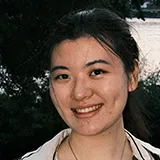
Beline Yuan is a student in Bioinformatics at École Polytechnique. Under the mentorship of Cody Slater in theVickovic’s lab, her project focuses on foundations of graph-based analysis and integration of direct RNA sequencing data.
1. What initially drew you to the Alliance Program and a summer at IICD?
Being able to come to the US and work with cutting-edge spatial transcriptomics technology, while benefiting from the mentorship of researchers and professors like those in the Vickovic Lab, where I am based.
2. Can you describe the research project you worked on and what you found most exciting or challenging about it?
I worked on probe design in token space for RNA. The idea is to identify the most specific portion of an RNA gene — moving beyond the fixed 50-nucleotide Visium probes currently used commercially, toward probes adapted to the specific pathology or experiment the lab is running. The project is part of a larger effort in the lab targeting specific cell types in the mouse brain, such as GABA-related genes.
3. How did working at the Institute differ from your past academic or research experiences?
Being able to connect the computational side with wet lab experiments was really exciting, especially in a real-world setting. I also got to work on a project end to end and see it implemented in the wet lab for an actual experiment — knowing that what I was doing wasn't just solving an exercise, but actually contributing to some of the most advanced research being done in the field today, that sense of impact was new for me and I really enjoyed it.
4. What is one unexpected thing you learned?
The work that comes after you get results — evaluating and validating whether your approach was rigorous enough, and whether you need to explore other directions. Ground truth in biology is genuinely hard to establish, and defining how to score results is a real challenge.
5. What's next for you after this internship?
Next year I'll complete an MEng in Bioengineering at Berkeley. I'm excited to keep exploring this field, and I'm open to opportunities in industry, particularly in biotech and spatial omics.