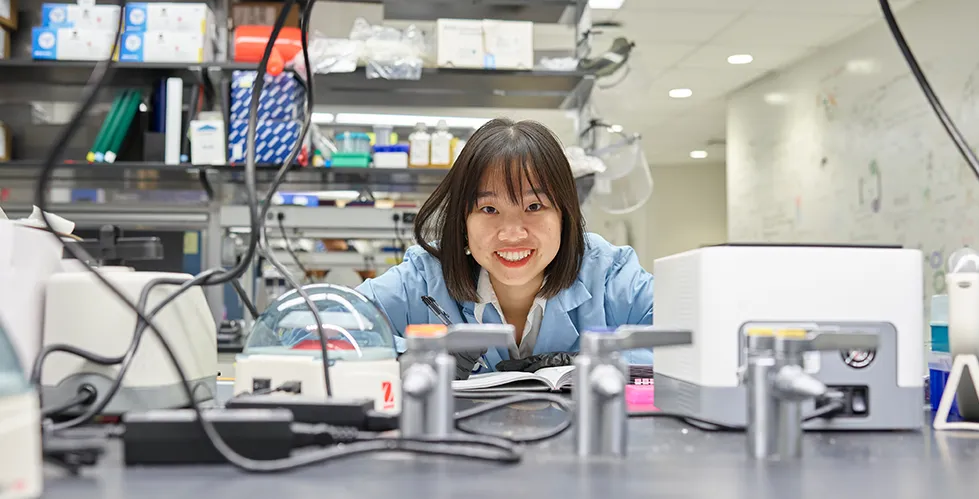
Dr. Lingting Shi is a Postdoctoral Research Scientist at Columbia University’s Herbert and Florence Irving Institute for Cancer Dynamics (IICD), where she is co-mentored by Dr. Elham Azizi and Dr. José McFaline-Figueroa. Her research focuses on cancer immunology and tumor-immune interactions, combining experimental and computational approaches to better understand how cells respond to immune pressure in disease.
Lingting studies the complex interactions between tumors, host cells, and the immune system. Her work explores how tumors evolve to evade immune attack and how host cells escape donor immune responses in the context of transplantation.
“I study tumor/host-immune interactions in diseases,” Lingting explains. “I am particularly interested in how genetic and environmental factors shape these interactions, and how we can reprogram them to improve therapy.”
In her current research, Lingting uses a combination of experimental and computational methods to understand how cancer and host cells adapt under immune pressure. In one project, she systematically modifies hundreds of genes in cancer cells and examines how these changes affect their ability to survive attacks from T cells, the immune cells responsible for eliminating tumors. By identifying genes that make cancer cells more susceptible to immune attack, her work may help reveal new targets for cancer immunotherapy.
At the same time, Lingting develops computational models and analytical pipelines to better understand complex human datasets. Working with patient samples, she tracks immune cells over time and across tissues to study how immune responses evolve in diseases such as graft-versus-host disease. Through this work, she aims to uncover how immune-cell dynamics contribute to disease progression and recovery.
For Lingting, the most exciting aspect of research is the opportunity to make discoveries every day. “Learning something new every day has been the most exciting and rewarding part of my work,” she says. “I find it especially fulfilling to watch small insights gradually build into a deeper understanding of biology.”
She describes one of the most fulfilling parts of her research: discovering patterns within seemingly overwhelming amounts of data. “One of the most exciting moments is when something that initially appears as noise suddenly reveals a clear biological story,” she explains. “It is in these moments that computational modeling and biology truly come together.”
Reflecting on her own path, Lingting emphasizes the importance of curiosity and interdisciplinary learning.” This field sits at the intersection of biology, computational modeling, and engineering, so learning across disciplines is incredibly valuable.” she notes. She also encourages students not to be discouraged by setbacks. “Failed experiments and unexpected results are part of the process. Seek out mentors, collaborate with others, and give yourself time to grow.”
As cancer research becomes increasingly data-driven and interdisciplinary, Lingting’s work highlights the power of integrating computational and experimental approaches to answer complex biological questions.
Through her research, she is helping to uncover new insights into how the immune system shapes disease and therapeutic responses, paving the way for more effective treatments in the future.