
Cancer Research Month Spotlight: Yue Wang Uses AI to Decode Cancer’s Genetic Blueprint
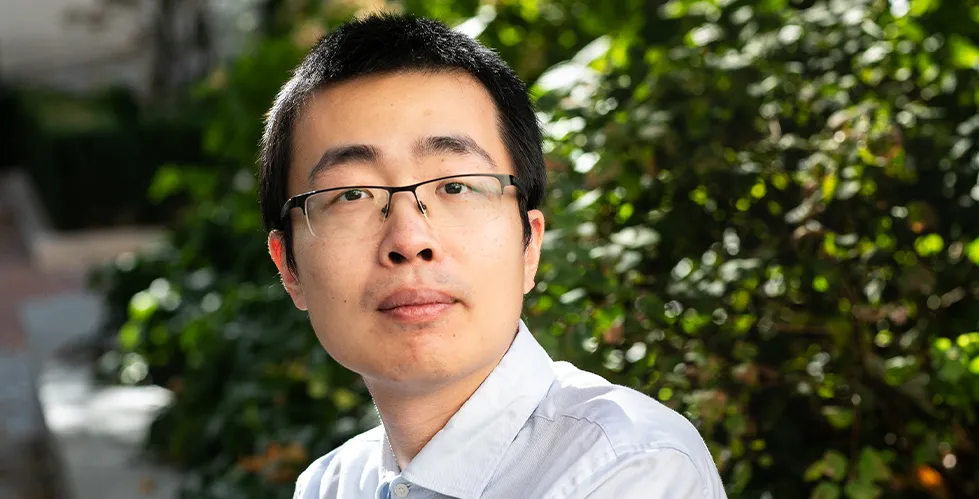
In honor of Cancer Research Month, we’re highlighting the groundbreaking work of IICD scientists who are uncovering new ways to understand and treat cancer. At IICD, Dr. Yue Wang, Associate Research Scientist in the Herbert and Florence Irving Institute for Cancer Dynamics and in the Department of Statistics, is combining the power of mathematics and artificial intelligence to better understand how cancer begins—and how we might stop it.
Using AI to Map Cancer’s Hidden Pathways
Dr. Wang’s research focuses on a fundamental but complex question: How do genes interact with one another to drive the behavior of cancer cells? Using mathematical models and artificial intelligence, his work aims to map the hidden regulatory networks that control how genes turn on and off—networks that are often disrupted in cancer.
“Cancer starts with genetic mutations,” Dr. Wang explains. “By understanding how genes normally regulate each other—and how those interactions change in cancer—we can start to predict and even influence how cancer behaves.”
Because much of this activity takes place deep inside living cells, it’s difficult to observe directly. “If we want a clear picture of what’s going on, we often have to kill the cell to get it. But that only gives us one snapshot in time,” he says. Therefore, his research leverages AI to reconstruct the underlying dynamics within cells by analyzing snapshots of different cells at various time points. This approach is akin to inferring human growth from photographs taken at different ages—except each individual contributes only a single photo.
QWENDY: A New Tool in the Fight Against Cancer
One of Dr. Wang’s most exciting recent projects is QWENDY, a new approach that uses large language models—similar to the ones that power modern AI chatbots—to improve how researchers understand gene networks. These advanced algorithms help predict how genes influence one another, shedding light on the chain reactions that drive cancer development.
“By improving the accuracy of gene regulatory network inference, we can better identify which genes are playing key roles in cancer,” Dr. Wang says. “That knowledge can help guide future treatments.”
Laying the Foundation for Personalized Cancer Therapies
Looking ahead, Dr. Wang sees his work as a key part of the growing field of personalized medicine. By building models that account for a patient’s unique genetic makeup, his research could help identify the most effective treatments for each individual.
“My goal is to help create more precise and targeted cancer therapies,” he explains. “By understanding the specific pathways that are disrupted in a patient’s tumor, we can tailor treatments in a smarter, more effective way.”
Facing the Complexity of Cancer with New Tools
One of the biggest challenges in cancer research is its complexity. Tumors often involve thousands of genes interacting in unpredictable ways. Dr. Wang’s work helps untangle those interactions using AI-driven models that make sense of the chaos.
He’s also passionate about bringing tools from other fields—like machine learning and reinforcement learning—into cancer research. “Cancer is a moving target,” he says. “We need creative, interdisciplinary approaches to keep up.”
Driven by Possibility
What keeps him motivated is the potential for real-world impact. “The idea that these mathematical models could lead to better treatments or even new therapies is what drives me,” Dr. Wang says. “There’s still so much we don’t know about how cancer works, but we’re getting closer—and that’s incredibly exciting.”
As we recognize Cancer Research Month, Dr. Wang’s work stands as a powerful example of how science, technology, and innovation can come together to drive progress in the fight against cancer.