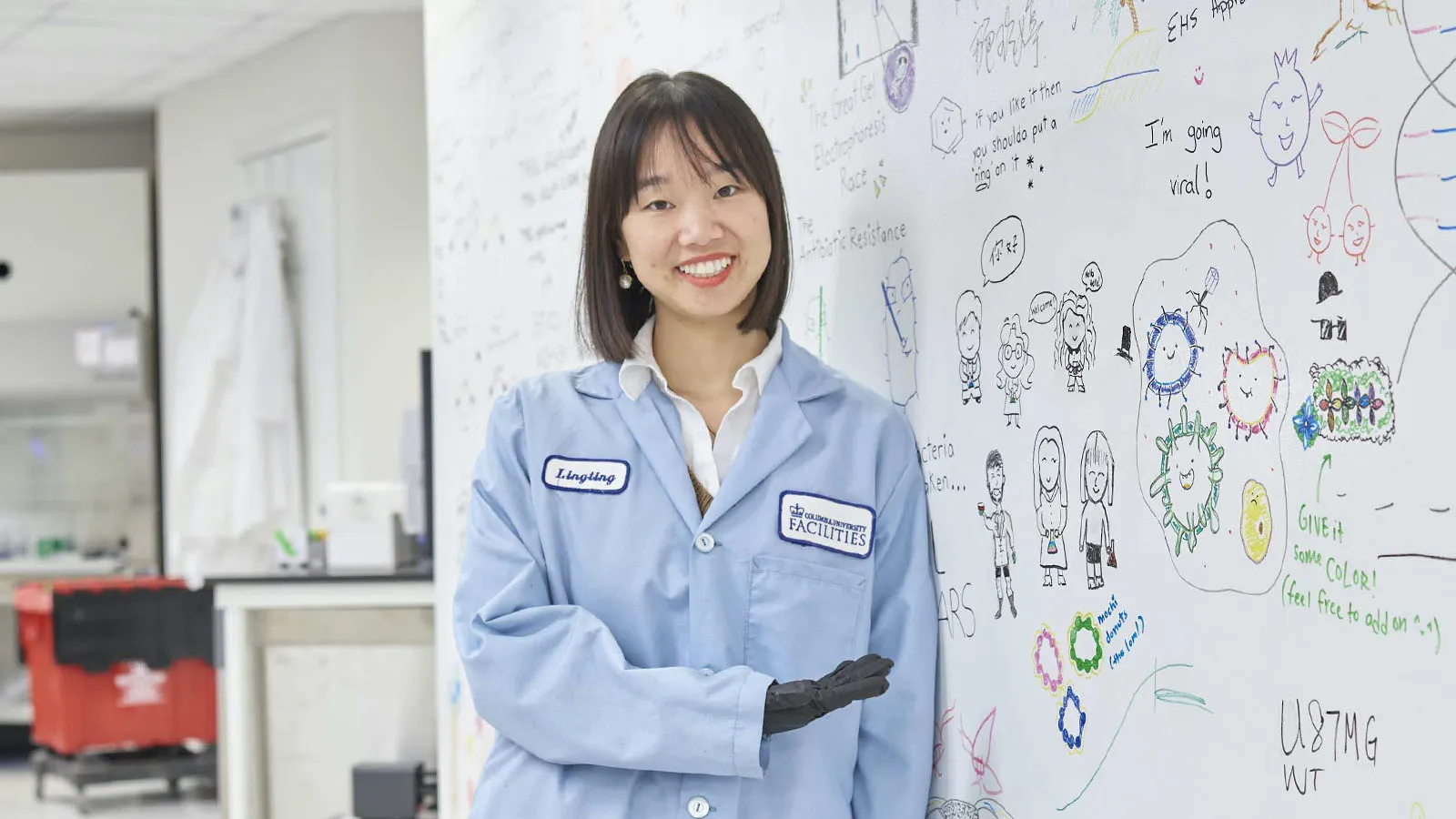
Recognizing our Researchers: IICD Celebrates Women and Girls in Science
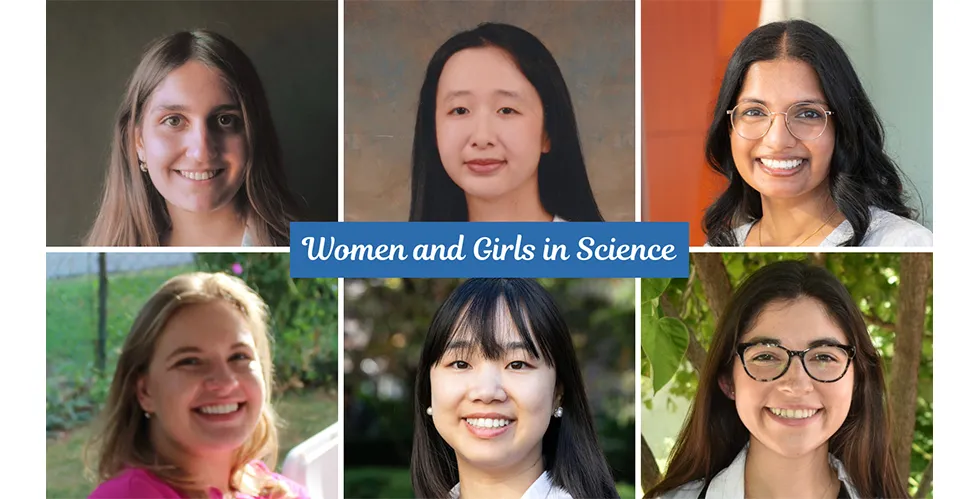
Today, February 11, marks the International Day of Women and Girls in Science. The IICD is proud to celebrate researchers making meaningful contributions to our community and to the field of cancer dynamics. Meet the women behind the science, learn about their journeys, and hear their hopes for the next generation of women researchers. Follow along on X, Bluesky, IG, and LinkedIn throughout the day.
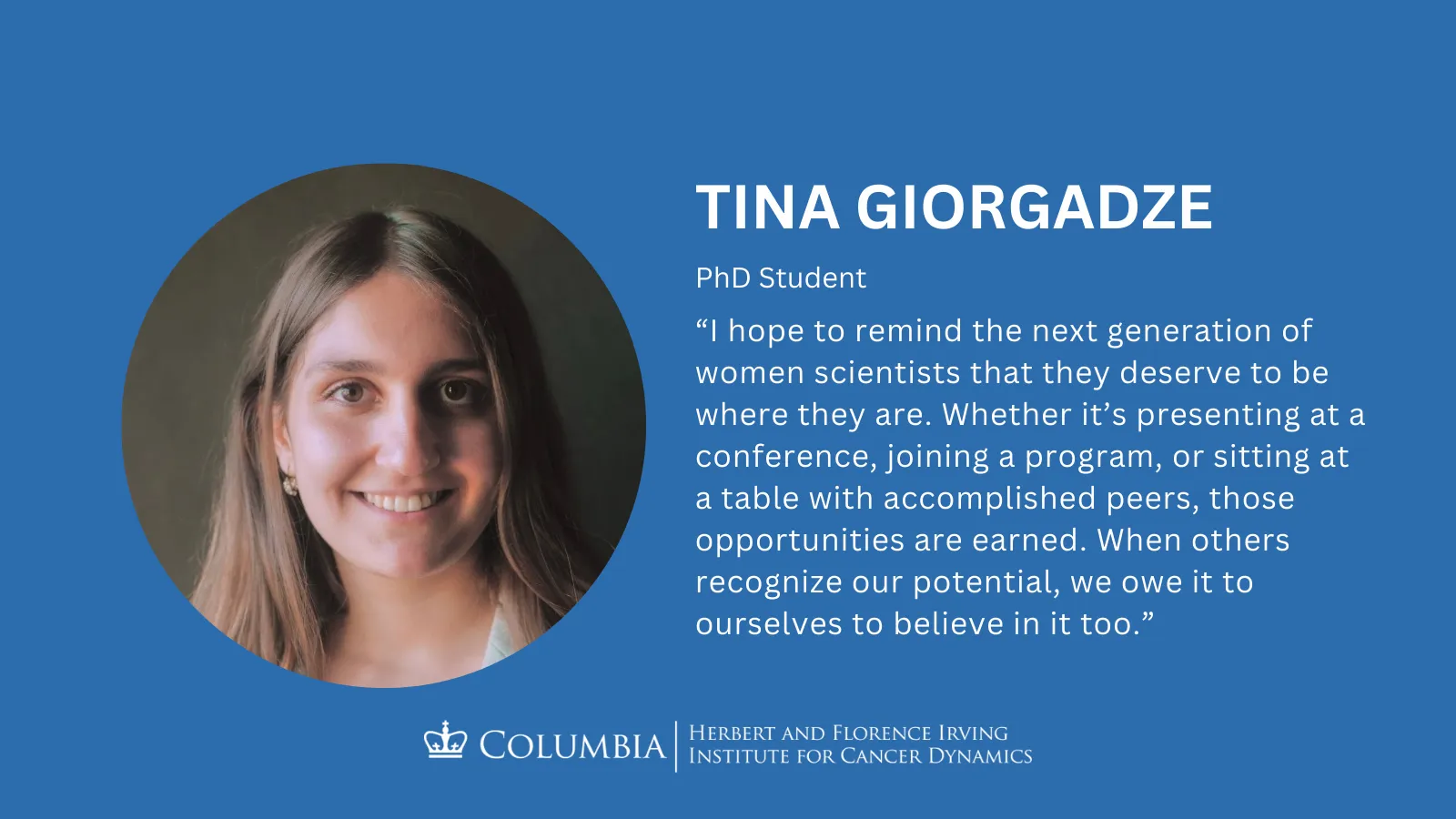
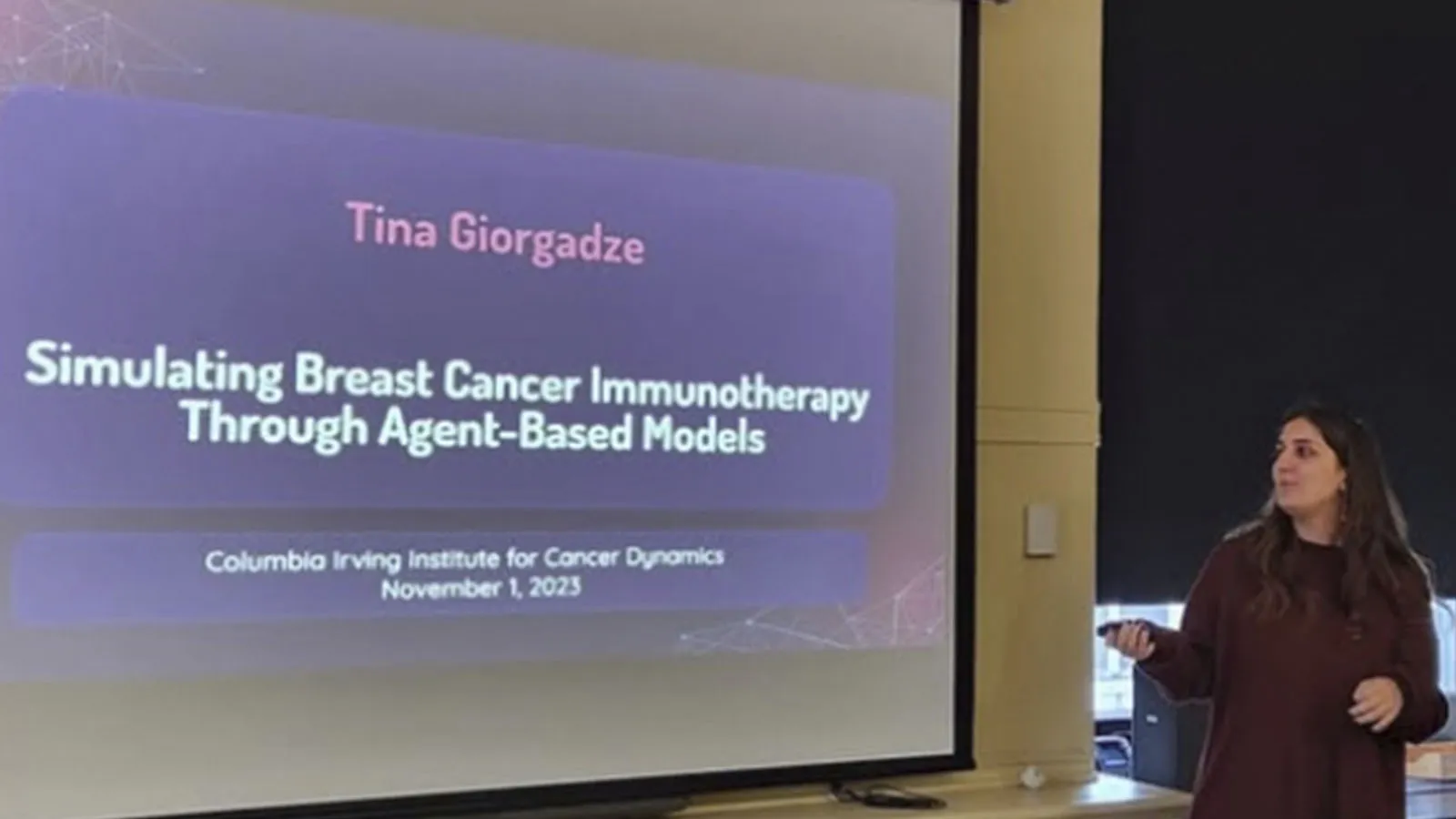
PhD Student, Tavaré Laboratory
What inspired you to pursue a career in science? Was there a specific person, event, or experience that sparked your interest in research or shaped your career path?
Growing up, math was always my favorite subject in school. I was fortunate enough to be admitted into my country's best math- and physics-focused high school, which further solidified my strong interest in analytical thinking.
My grandmother passed away from breast cancer during my Junior year in high school. It motivated me to apply my mathematical and computational background to cancer research, with a particular focus on breast cancer. I centered my undergraduate research on this area, and I have continued that trajectory in graduate school through my work with IICD.
What continues to drive your passion for research today?
What continues to drive my passion for research is the iterative nature of problem-solving. I genuinely enjoy starting each week by asking new questions, identifying weaknesses in my current approach, and mapping out how individual tasks contribute to a larger scientific picture. Even when progress is slow, the process of refining ideas and steadily improving my work is deeply motivating.
Can you share a moment in your career or research that you’re particularly proud of or that has had a lasting impact on you?
During my first year as a statistics PhD student, I volunteered as a consultant for students in other disciplines. Seeing how my statistical input meaningfully contributed to their projects was both rewarding and formative. It boosted my confidence and reinforced the importance of interdisciplinary collaboration in my research career.
What challenges have you faced, and how have you overcome them?
One of the biggest challenges I have faced was beginning my statistics PhD with a background more heavily focused on mathematics and computer science than formal statistics. During my first year, the amount of catching up required to meet the program’s expectations felt overwhelming. However, this experience forced me to develop effective strategies for seeking help, identifying gaps in my knowledge, and creating a structured, independent learning plan.
What excites you most about the future of research and the role women will play in shaping it?
The rapid pace of innovation in computing is opening up entirely new possibilities for research, especially in computational biology, and it is exciting to contribute to the field during such a transformative time. I am also encouraged by the growing presence of women in science and academia. Seeing more women succeed as researchers and leaders helps create environments that feel safer and more welcoming for a future generation of girls interested in STEM.
As a role model, what message do you hope to convey to the next generation of women scientists?
I hope to remind the next generation of women scientists that they deserve to be where they are. Whether it’s presenting at a conference, joining a program, or sitting at a table with accomplished peers, those opportunities are earned. When others recognize our potential, we owe it to ourselves to believe in it too.
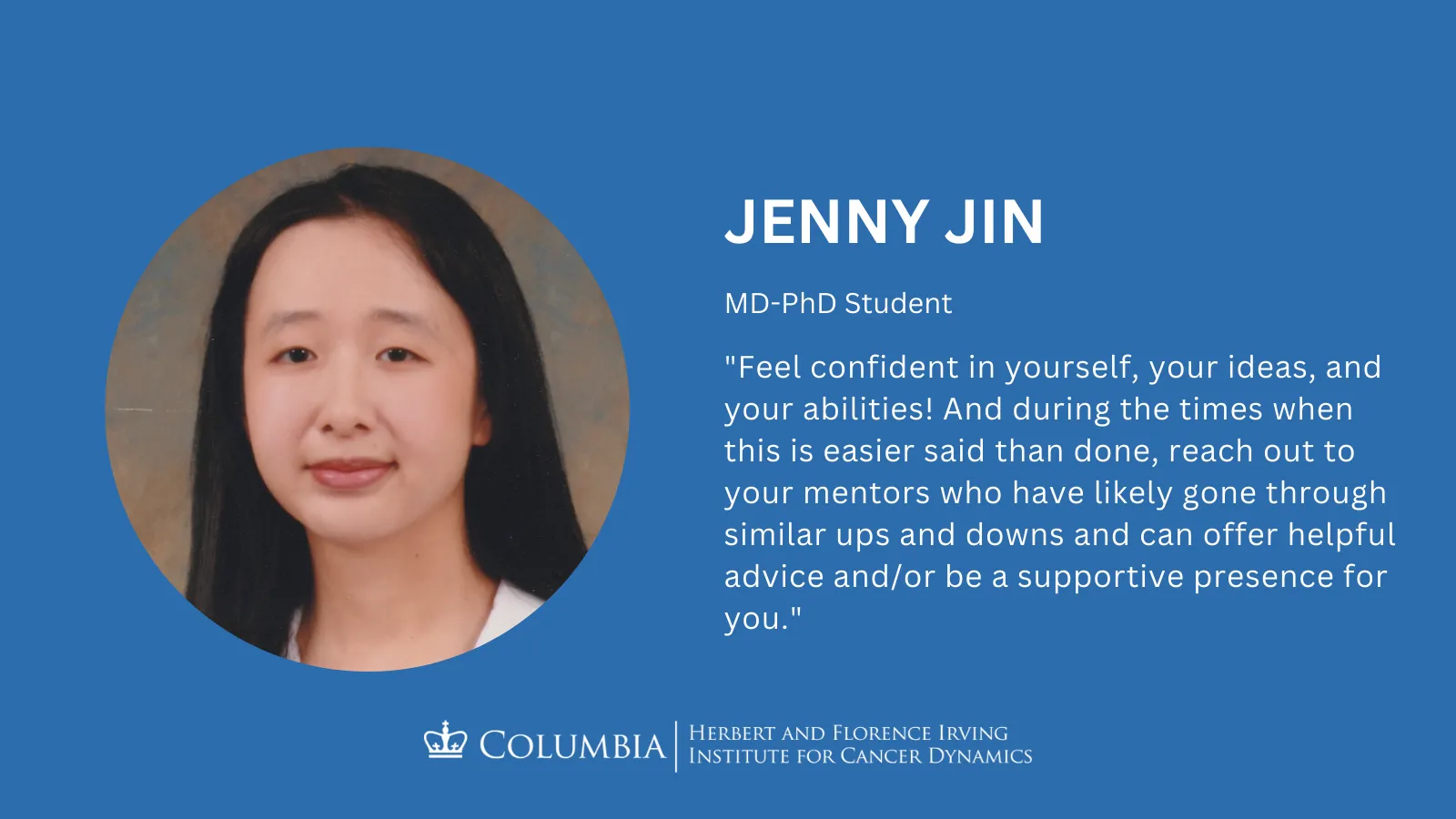
MD-PhD Student, Stockwell Laboratory
What inspired you to pursue a career in science? Was there a specific person, event, or experience that sparked your interest in research or shaped your career path?
I have been fortunate enough to have my passion for science nurtured since childhood, with my parents (as researchers themselves) indulging my every curiosity into how we as humans live and function. During research experiences in high school and undergrad, I learned from my mentors that through MD-PhD training, I could merge my interest in biomedical research with the highly rewarding experience of patient care.
What continues to drive your passion for research today?
One of my favorite parts of the PhD has been the discussions with my labmates, in both formal lab meetings and informal chats in the hallway, when we bounce ideas off each other and mentally soar with exciting hypotheses and possibilities; this continually boosts my passion for research and close collaborations with other researchers.
Can you share a moment in your career or research that you’re particularly proud of or that has had a lasting impact on you?
In 2025 I was selected as a finalist for the Regeneron Prize, a competition in which participants submit proposals for a "dream project," completely separate from their thesis projects, to demonstrate their ability to formulate an original research idea and approach. I am very proud of this recognition as well as all that I have been able to learn so far in my PhD about scientific reasoning and research proposal writing.
What challenges have you faced, and how have you overcome them?Earlier on in my research journey, I tended to feel reticent about expressing my thoughts in group meetings, leaving me frustrated that I sometimes wasn't able to actively participate in fruitful discussions I was eager to have. One practical strategy that helped me overcome this was to allot time before a meeting to anticipate the questions that I might encounter and answer them in my own head, providing myself an internal rehearsal space. With this I began to feel much more confident not only to talk about my research in a group setting, but also to ask questions and offer suggestions to others, contributing to the value of team discussions in research.
What excites you most about the future of research and the role women will play in shaping it?As a physician-scientist-in-training, I am most excited for advancements in translational research and the interplay between research directions and patient experiences. Women in research and clinical care will play a crucial role in ensuring that female patients' experiences are well-incorporated in informing research efforts and priorities.
As a role model, what message do you hope to convey to the next generation of women scientists?
Feel confident in yourself, your ideas, and your abilities! And during the times when this is easier said than done, reach out to your mentors who have likely gone through similar ups and downs and can offer helpful advice and/or be a supportive presence for you.
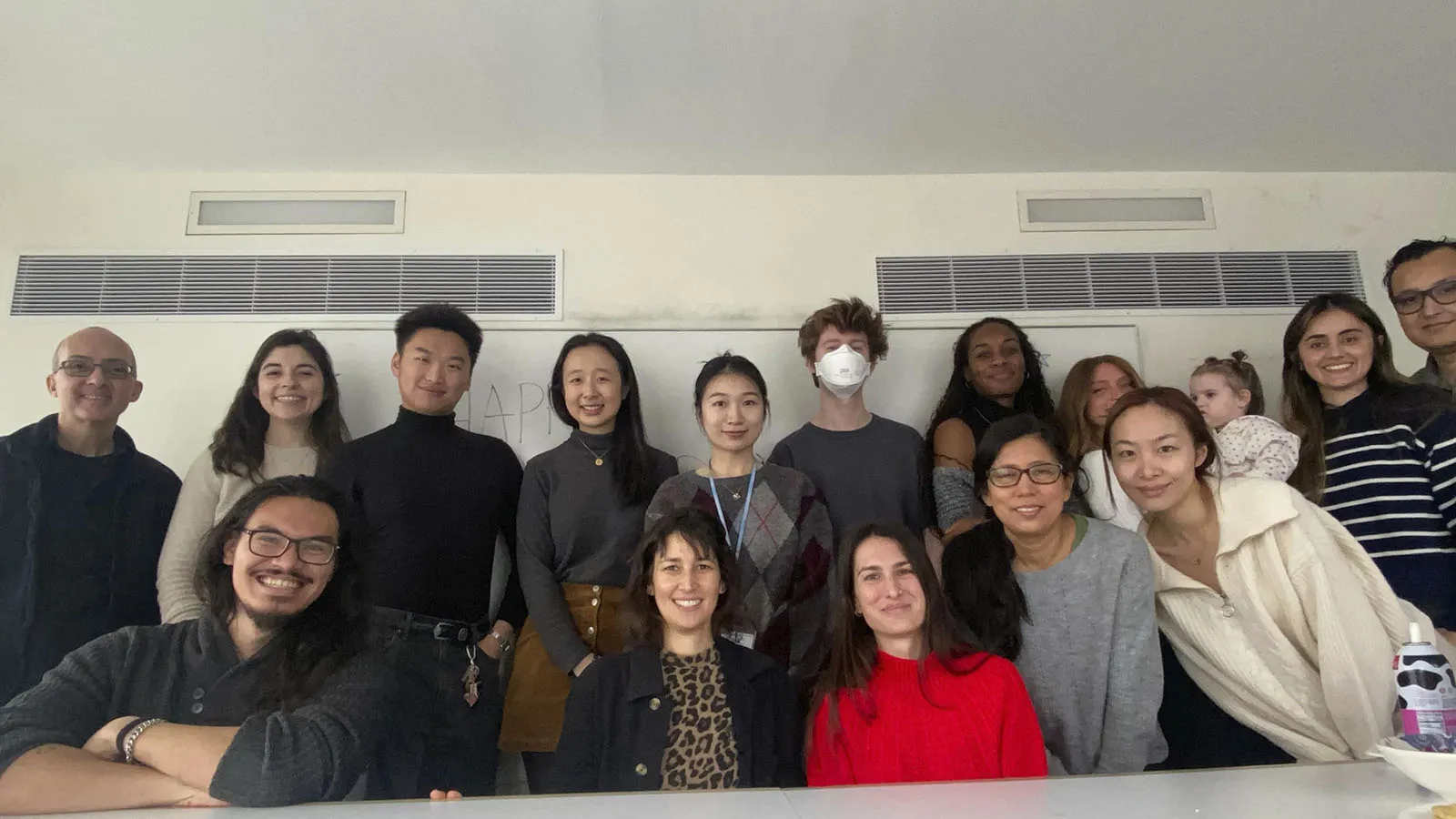
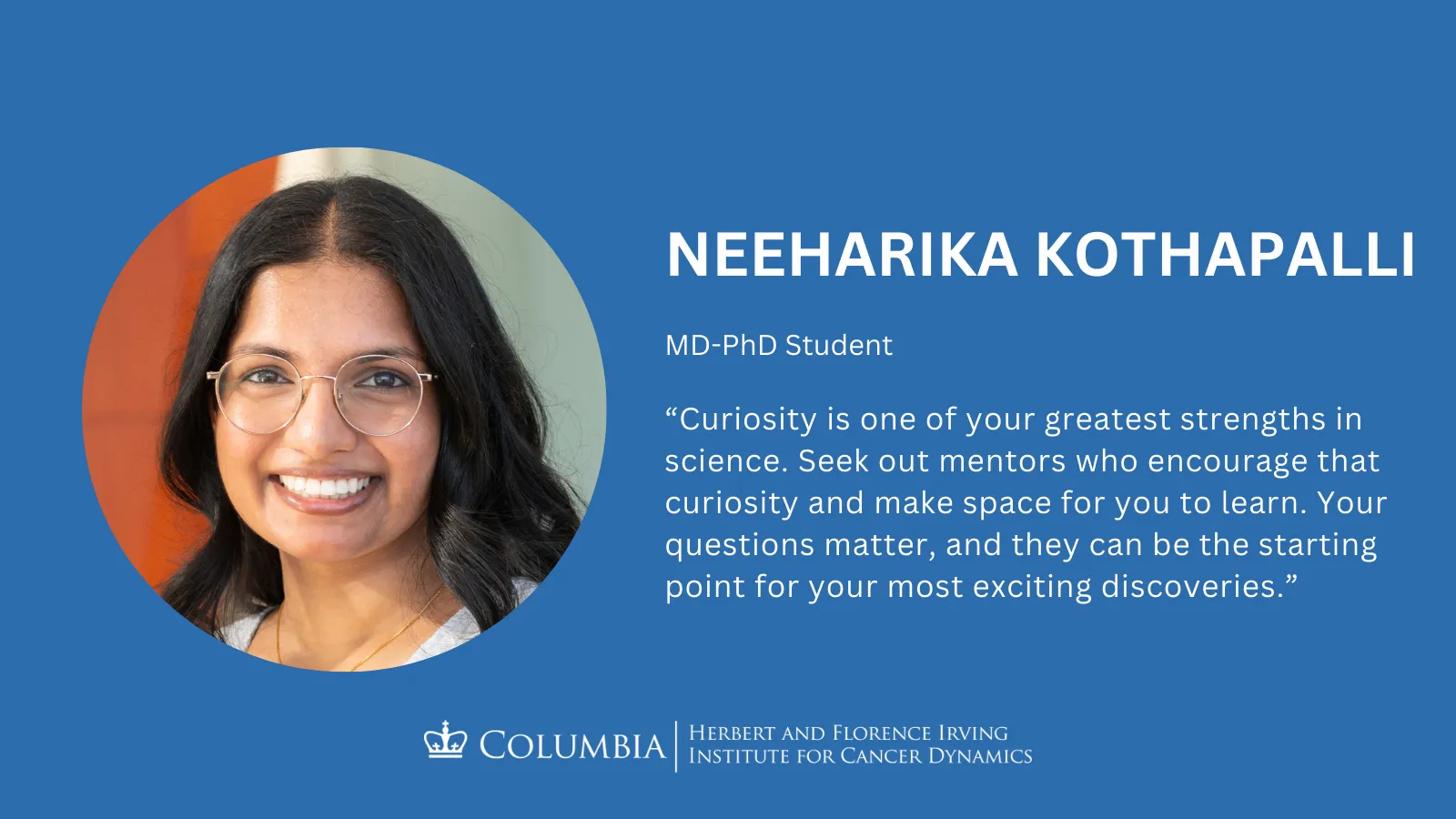
MD-PhD Student, Azizi and Izar Laboratories
What inspired you to pursue a career in science? Was there a specific person, event, or experience that sparked your interest in research or shaped your career path?
I came into college with a budding interest in medicine, and as I started spending more time in research, I realized how exciting it is to work at the intersection—where you can take a clinical challenge and chase down the biology behind it with the potential to change how we diagnose or treat disease. I am grateful to have had mentors who exemplified the physician-scientist role. As an undergrad in Dr. Naftali Kaminski’s lab, I worked on idiopathic pulmonary fibrosis and COPD, two conditions with limited therapies and much we don’t understand at the molecular level. Using patient-derived transcriptomic data, we tracked how cell states and signaling programs evolve with disease progression—insights that could guide diagnosis and novel therapeutics. It was this synergy between medicine and research that ultimately inspired me to pursue a career in science.
What continues to drive your passion for research today?
My medical school training thus far has given me the chance to learn from a wide range of patients and see up close the complexity and day-to-day burden of their disorders. Those experiences have made the clinical gaps feel more concrete, and they continue to drive my passion for research. In my PhD work, it’s especially exciting to contribute to projects that aim to fill those gaps and ultimately improve how we care for patients.
Can you share a moment in your career or research that you’re particularly proud of or that has had a lasting impact on you?
One pivotal moment in my research journey was transitioning from wet-lab work to computational research early in college. When the pandemic forced our work to go fully remote, I chose to pivot and learn entirely new computational methods despite the added challenge of building those skills without in-person mentorship or a lab environment. I’m proud of that growth, and the decision ultimately shaped the direction of my coursework and research for the rest of college, laying the foundation for my current work.
What challenges have you faced, and how have you overcome them?
One challenge I’ve faced—especially moving through spaces that are still often male-dominated—has been navigating self-doubt and the pressure to “prove” I belong before speaking up. Early on, that sometimes meant holding back ideas, asking fewer questions than I had, or second-guessing my instincts. I continue to work on this by building confidence in my skills and ideas, and by surrounding myself with mentors and peers who support me and push me to grow. Through those relationships, I’ve learned to balance trusting what I do know with being comfortable naming what I don’t.
What excites you most about the future of research and the role women will play in shaping it?
What excites me most about the future of research is how rapidly advances in computational tools are expanding what we can do. These approaches are beginning to tackle longstanding clinical challenges with a level of scale, precision, and insight that wasn’t feasible even a few years ago. I’m equally excited about the role women will play in driving this progress. As more women lead research groups, we broaden not only who is doing science, but also the questions we ask and the cultures we create—cultures that set the stage for more creative, rigorous, and impactful discoveries.
As a role model, what message do you hope to convey to the next generation of women scientists?
Earlier in my research journey, I wish someone had really pushed me to ask more questions—even the ones I worried might be “silly.” Curiosity is one of your greatest strengths in science. Seek out mentors who encourage that curiosity and make space for you to learn. Your questions matter, and they can be the starting point for your most exciting discoveries.
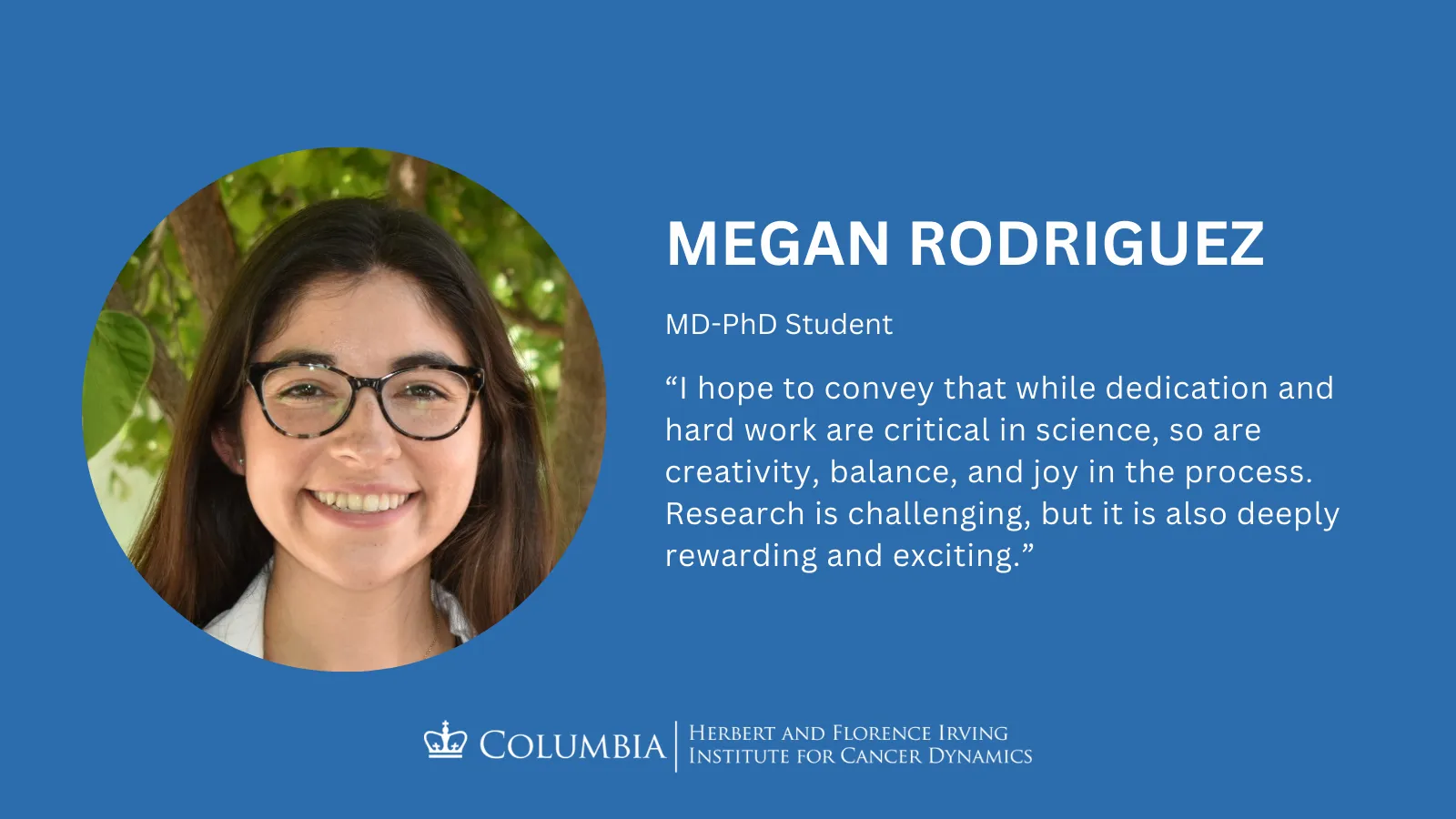
MD-PhD Student, Stockwell Laboratory
What inspired you to pursue a career in science? Was there a specific person, event, or experience that sparked your interest in research or shaped your career path?
My interest in science took shape during my undergraduate experience in the Beckman Scholars Program, where I had the opportunity to write my own research proposal, lead an independent project, and receive feedback in group sessions with classmates and faculty from a range of disciplines. This collaborative environment was incredibly energizing; it was the first time I felt the excitement of asking my own scientific questions and seeing ideas evolve through discussion and experimentation. This experience showed me how creative and collaborative science can be and shaped my decision to pursue a research-focused career.
What continues to drive your passion for research today?
A major driver of my passion for research is its connection to medicine and the potential to advance therapeutics for patients. As an MD-PhD student, I’m deeply driven by the opportunity to translate discoveries at the bench into therapies that can improve patients’ lives. Learning how novel therapeutics are developed and then seeing their real-world impact in oncology and neurology, particularly during my clinical rotations, has reinforced how important this work is. Alongside this, I’m fueled by a genuine love of curiosity-driven research and the creativity that comes with exploring unanswered questions.
Can you share a moment in your career or research that you’re particularly proud of or that has had a lasting impact on you?
This past summer, I had the opportunity to serve as a primary mentor for an undergraduate student, which was a particularly meaningful milestone for me. I designed a small project connected to my own research and guided her through experimental techniques, scientific thinking, and reading the literature—her first exposure to a biology lab and cell culture. Watching her grow in confidence reminded me of my own experiences in early training and gave me a new appreciation for how much I’ve learned along the way. This experience affirmed how important mentorship is to me and helped me realize how much knowledge and confidence I’ve gained.
What challenges have you faced, and how have you overcome them?
One ongoing challenge has been learning when to ask for help versus when to work through problems independently, especially when learning new techniques. Balancing efficiency with independence can be difficult, particularly in lab environments that strongly prioritize self-direction. Another challenge came earlier in my training, when I found myself as the most senior research assistant in a small lab despite still being relatively early in my career. Navigating leadership responsibilities while being honest about what I didn’t yet know taught me a lot about communication, humility, and growth.
What excites you most about the future of research and the role women will play in shaping it?
I’m excited by how increasingly collaborative and translational research has become. As an MD-PhD student, it’s especially motivating to see different disciplines come together to address complex problems with direct relevance to patient care. I’m also encouraged by the growing diversity in science and medicine, including increased representation of women and individuals from varied backgrounds. Different perspectives are essential for innovation, and I believe this diversity will continue to strengthen the impact of scientific research.
As a role model, what message do you hope to convey to the next generation of women scientists?
I hope to convey that while dedication and hard work are critical in science, so are creativity, balance, and joy in the process. Research is challenging, but it is also deeply rewarding and exciting. Especially in basic science training, there are long periods focused on learning and growth without immediate results. Those moments are not setbacks; they are an essential part of becoming a scientist.
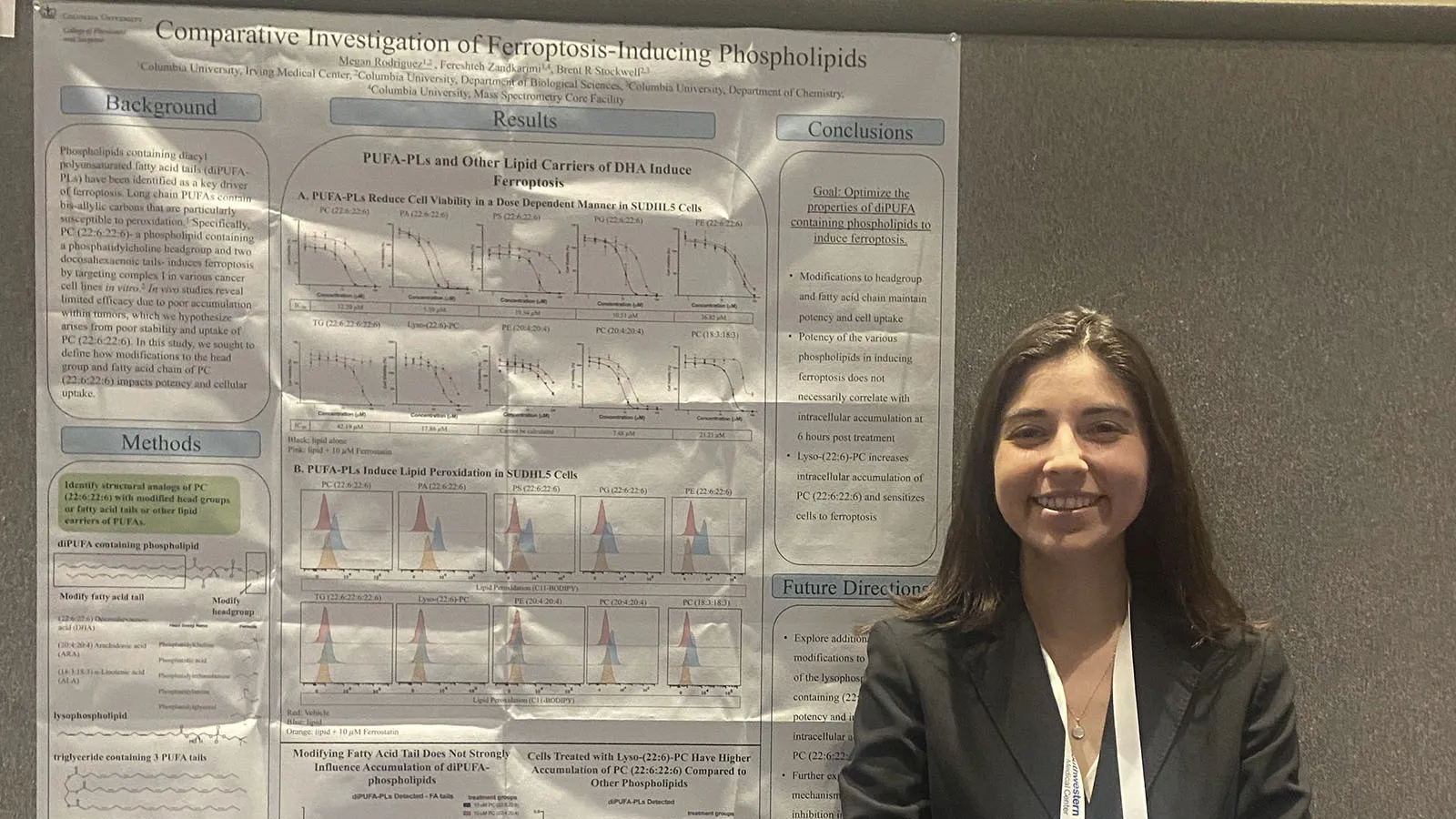
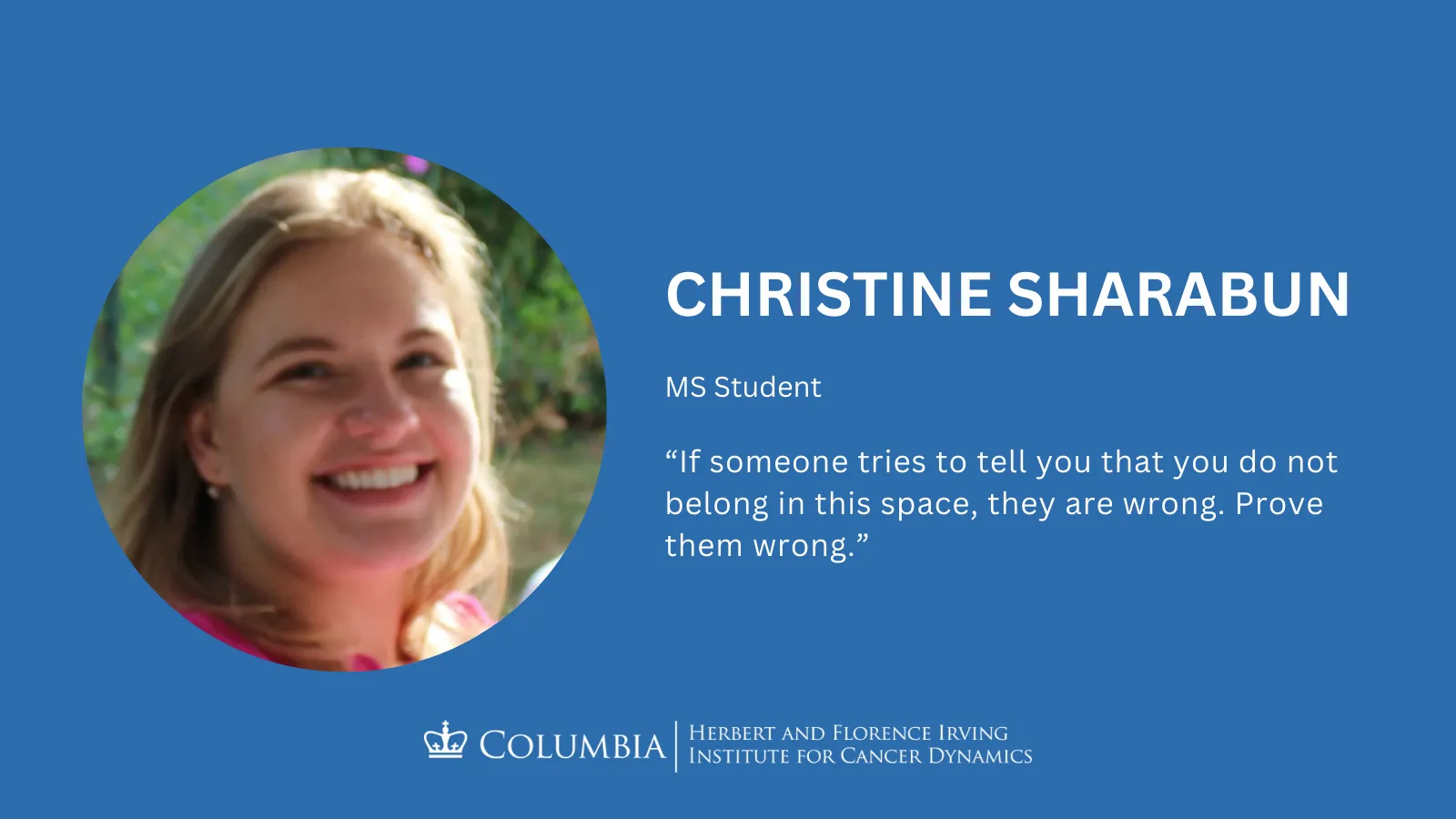
MS Student, Rane Laboratory
What inspired you to pursue a career in science? Was there a specific person, event, or experience that sparked your interest in research or shaped your career path?
I was inspired to pursue a career in science because I was always interested in math and understanding how the natural and physical world works. My interest in the sciences and math began in high school when I was instructed by a few passionate teachers who absolutely loved the subjects that they taught. Looking back, I caught on to that passion and carried it through my career.
What continues to drive your passion for research today?
I am inspired to apply my research skills to helping save patients lives. I hope to continuously work in a space that positively impacts patients.
Can you share a moment in your career or research that you’re particularly proud of or that has had a lasting impact on you?
I am proud of my ability to pursue and finish an MS program in a discipline different from my undergraduate degree. I found my graduate experience to be challenging and rewarding as it supplements my career growth.
What challenges have you faced, and how have you overcome them?
I have faced having my resilience tested when experiments failed consistently and repeatedly. I overcame the frustration of having an experiment repeatedly fail by maintaining my tenacity to repeat it and get it right.
What excites you most about the future of research and the role women will play in shaping it?
I am so excited to hear and learn about the novel research that women scientists are working on and the problems that they are aiming to solve.
As a role model, what message do you hope to convey to the next generation of women scientists?
If someone tries to tell you that you do not belong in this space, they are wrong. Prove them wrong.
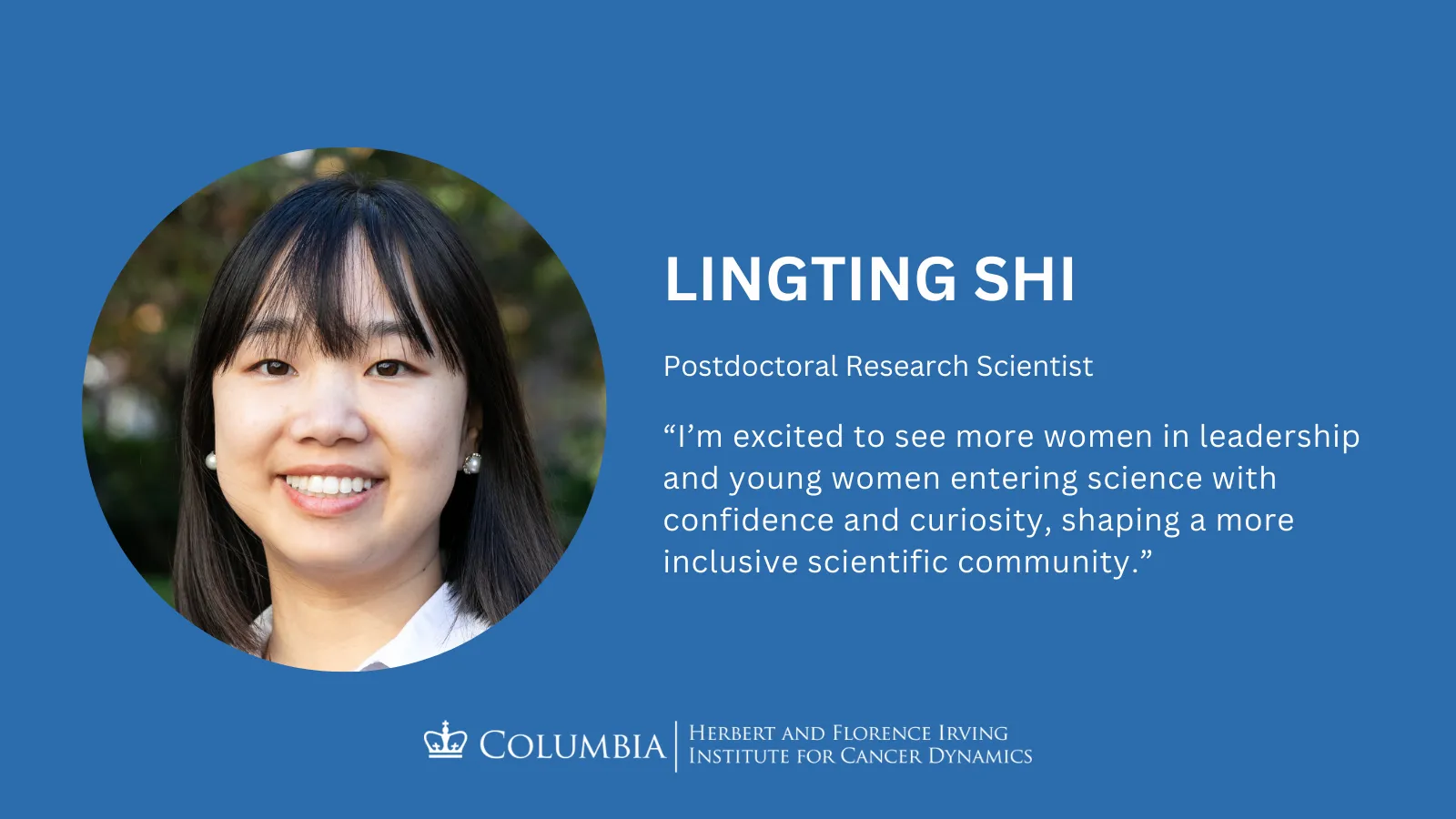
Postdoctoral Research Scientist, Azizi and McFaline-Figueroa Laboratories
What inspired you to pursue a career in science? Was there a specific person, event, or experience that sparked your interest in research or shaped your career path?
I was inspired by the belief that research has the power to transform how we understand and treat disease, ultimately helping us overcome diseases like cancer.
What continues to drive your passion for research today?
The process of discovery motivates me, as I learn something new every day and watch small insights build toward a broader biological understanding.
Can you share a moment in your career or research that you’re particularly proud of or that has had a lasting impact on you?
My thesis defense, where I reflected on five years of research and shared it with a broad audience, including mentors, colleagues, family, and friends from both scientific and non-scientific backgrounds, marked a milestone and solidified my decision to pursue a research career.
What challenges have you faced, and how have you overcome them?
I’ve faced many internal and external challenges, including fear of public speaking, failed projects, and rejection from grant and journal reviewers. I overcame them by learning from my mistakes, seeking feedback from mentors and colleagues, learning from others’ successes, and most importantly, persisting.
What excites you most about the future of research and the role women will play in shaping it?
I’m excited to see more women in leadership and young women entering science with confidence and curiosity, shaping a more inclusive scientific community.
As a role model, what message do you hope to convey to the next generation of women scientists?
Don’t let anyone, including yourself, define your limits. Follow your passion and keep going.