
Q&A with 2025 IICD SRP Interns
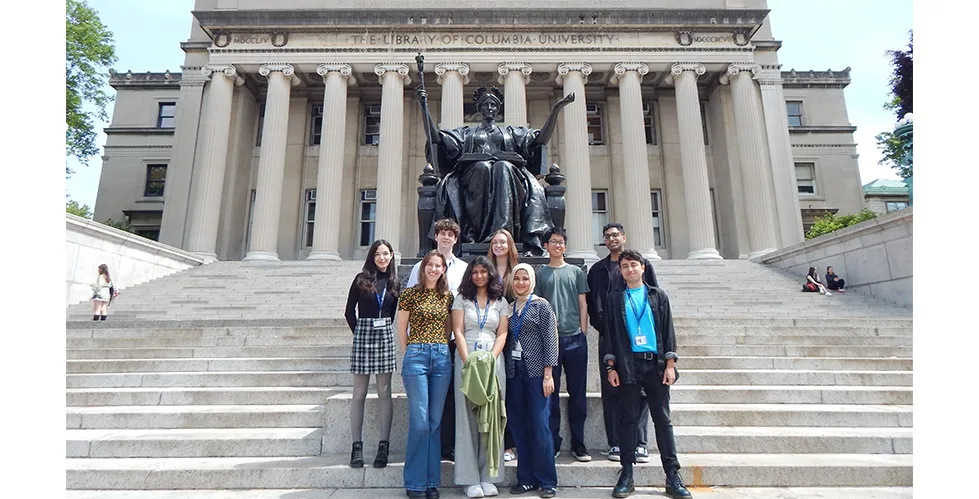
Each summer, the Summer Research Program at IICD brings together a remarkable cohort of undergraduates from across the country to explore interdisciplinary research at the intersection of biology, mathematics, and computer science. This year, we’re excited to introduce the 2025 interns, ten driven students with diverse interests, inspiring stories, and big ambitions.
Catch their stories all summer long on Twitter, Instagram, Bluesky, and LinkedIn.
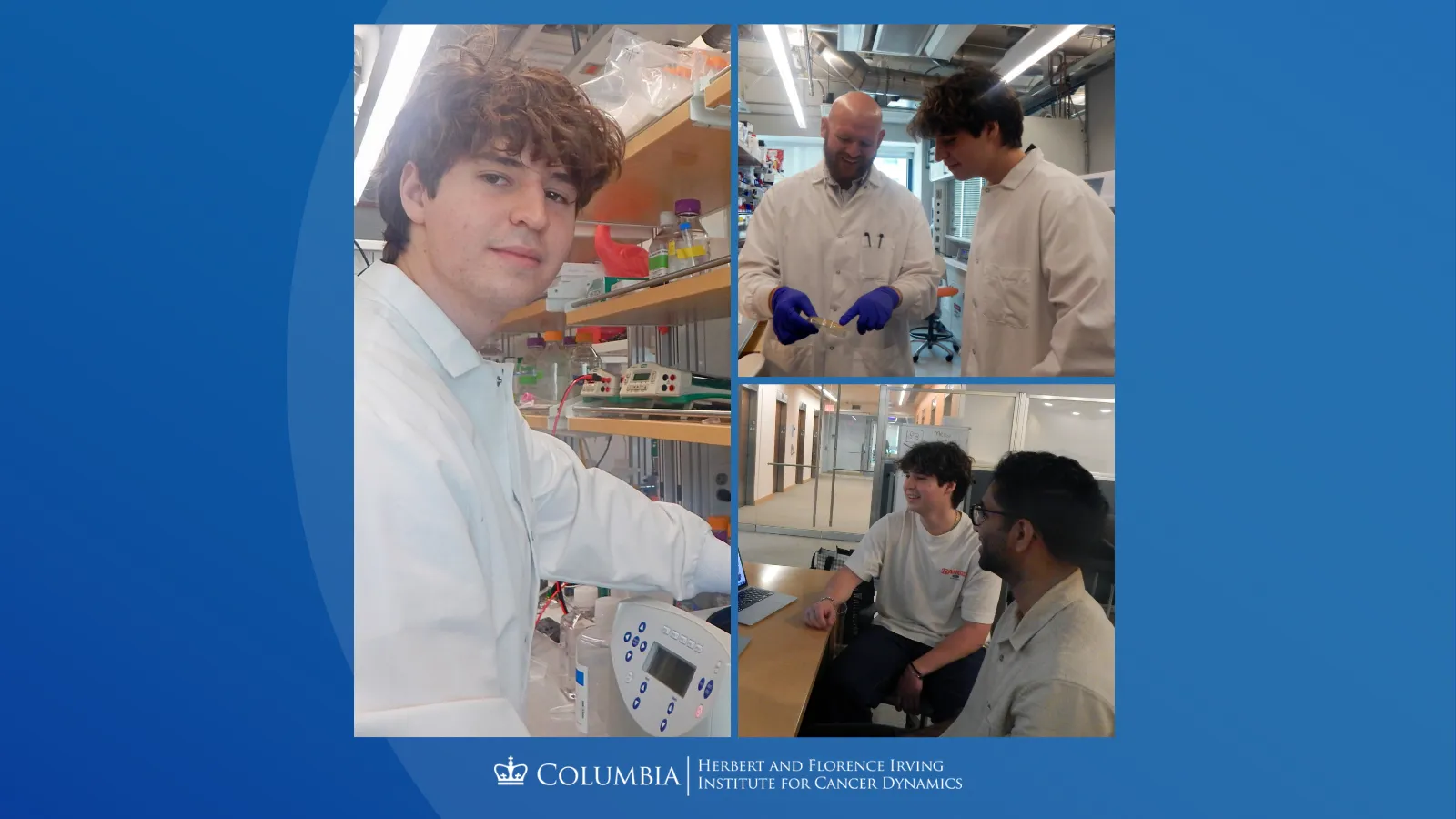
Daniel Alshansky is a rising junior majoring in Biology and Computer Science at Hofstra University. His research interests focus on developing new transcriptomic engineering tools in the Vickovic’s lab at the New York Genome Center.
1/ How did you get interested in science and doing research?
My interest in science likely started with how curious I was as a child. I would dig in my backyard to find whatever animals were in the soil, stick batteries in my nose to see if I would gain any kind of superpowers, and toss all my mom’s beauty products into one container to see what would happen. Despite giving my parents a headache, they encouraged my habit of exploration, and it grew with me. In high school, I was able to work on some real research projects, which further solidified my passion for finding answers to interesting questions.
2/ What is your favorite thing about science?
My favorite thing about science is its ability to explain the world around us. I find it fascinating how real-life phenomena are able to be broken down and explained through scientific reasoning. Additionally, I enjoy the fact that there is always a challenge or something new to learn.
3/ What are your plans after receiving your undergraduate degree?
In the long term, I aim to pursue an MD or an MD/PhD. Along the way, I intend to continue doing research, and hopefully, I can gain some experience with translational medicine.
4/ If you could be any scientist, who would it be and why?
If I could be any scientist, I would be Carl Sagan due to his unique ability to blend science with storytelling. I remember watching his show as a child and being fascinated by the topics he talked about despite knowing very little about them. He had a very permeable passion for his studies that allowed him to easily connect with others. I believe that Sagan had the qualities every scientist should aim to embody.
5/ Tell us a fun fact about yourself.
I used to be a competitive ballroom dancer. I also collect Pokémon cards!
6/ What do you like to do when you are not in the lab?
When I’m not in the lab, I try to spend time with my family and friends. I also enjoy staying active by going to the gym or playing volleyball, basketball, and spikeball, even though I usually lose!
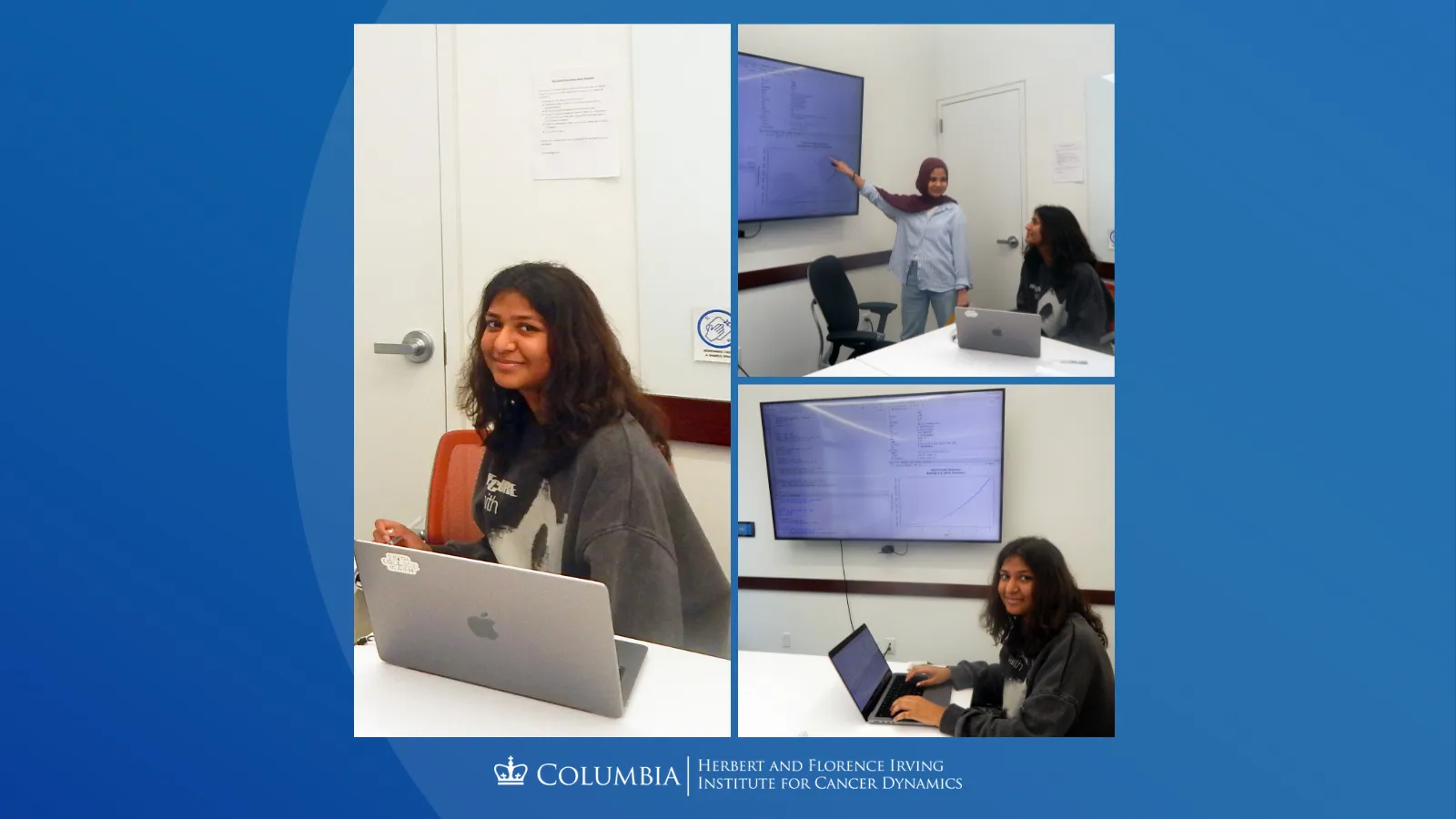
Chandrima Chatterjee is a rising junior majoring in Mathematical Statistics and Computer Science at Smith College, mentored this summer by Dr. Simon Tavaré. Her research focuses on applying quantitative methods to biological datasets, combining her interest in statistics with real-world scientific discovery.
1/ How did you get interested in science and doing research?
My parents are scientists and researchers. Growing up with them always talking about their exciting work and new discoveries inspired me to explore research.
2/ What is your favorite thing about science?
My favorite thing about science is that people build on the works of others in order to apply it to their own research. If one new discovery is made, then it gives way to ten more discoveries, and I think that’s pretty cool.
3/ What are your plans after receiving your undergraduate degree?
I want to go to graduate school in a quantitative field related to my major, statistics, but I’m not sure if I want a few years of job experience first or if I’ll go straight after I graduate from college.
4/ If you could be any scientist, who would it be and why?
I would be Charles Darwin because not only was he a renowned and amazing scientist who created the theory of evolution, but also a writer, and I like to write!
5/ Tell us a fun fact about yourself.
I am not allergic to ducks or eggs, but I am allergic to duck eggs.
6/ What do you like to do when you are not in the lab?
I like to read, go on walks, listen to music, spend time with friends, try new places to eat, and explore the city.
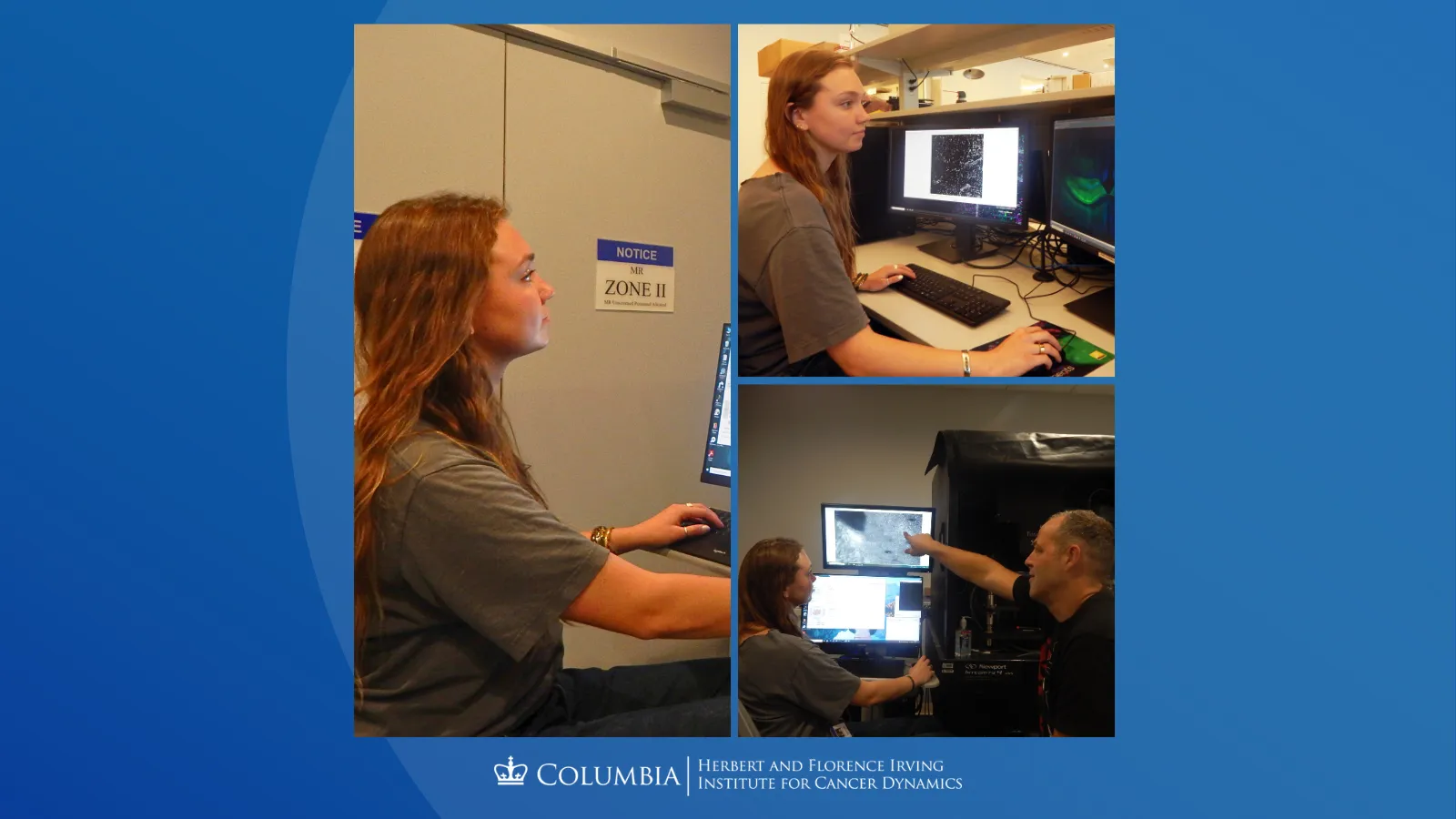
Darby Dodge is a rising senior majoring in Biology at San Diego State University, mentored by Dr. Darcy Peterka. Her research explores neuro-oncology imaging to understand gliomas at the Zukerman Institute.
1/ How did you get interested in science and doing research?
I have always been drawn to science, but it was during my high school biology and chemistry classes that my interest really started to grow. Even then, I did not realize I wanted to pursue research until my second year of college. As I became more curious about scientific ideas beyond what I was learning in class, I reached out to faculty and was connected with my research mentor. They opened my eyes to what research truly is and the endless opportunities it provides to keep asking questions and learning. What I find so exciting about science and research is the ability to ask almost any question and work toward a deeper personal and universal understanding, as the answers you discover often have a broader impact than you might expect.
2/ What is your favorite thing about science?
My favorite thing about science is its ability to explain everything down to the tiniest components. This is why I am so intrigued by life science specifically, as it’s so crazy to me that a machine as complex as our bodies can be broken down into a series of intricate mechanisms and seemingly simple interactions between molecules.
3/ What are your plans after receiving your undergraduate degree?
After earning my B.S. in biology, I plan on pursuing graduate school and ultimately earning a Ph.D. in bioengineering. I am not sure as of right now where I want to go after graduate school, but I think I would like to enter the biotech industry, ideally collaborating with other scholars and scientists to continue developing exciting technologies that can answer important scientific questions.
4/ If you could be any scientist, who would it be and why?
If I could be any scientist, I would choose Frances Arnold. I admire how her pioneering work in directed enzyme evolution transformed bioengineering and sustainable chemistry, while her leadership redefined what it means to be a scientist. I’m especially inspired by her openness about failure, uncertainty, and the importance of finding your own path in science. Through my own experiences, I’ve come to value not only resilience and curiosity, but also the power of diverse, collaborative environments where different perspectives and ideas thrive. Frances Arnold’s work and values reflect the kind of scientist I hope to become.
5/ Tell us a fun fact about yourself.
One fun fact about me is that I’m a certified scuba diver and have always been fascinated by marine animals, ecosystems, and environments. My love for the ocean and marine biology is actually what first sparked my interest in science as a kid, and it’s a passion that’s stayed with me ever since. Ocean conservation is especially close to my heart because I believe it’s so important to protect these beautiful, vital ecosystems. When I’m not diving, I love snorkeling and tide pooling, which are also amazing ways to observe the incredible wildlife that call our oceans home.
6/ What do you like to do when you are not in the lab?
When I am not in the lab, I love being outside! I am originally from Colorado and go to school in California, so I have a deep appreciation for everything from the mountains to the ocean. In the winters, I really enjoy snowboarding with friends and family, and in the summers, I love spending as much time at the beach as possible. I also love yoga and all of the mental benefits it provides, and I find that it helps me a lot to balance my personal and academic workloads.
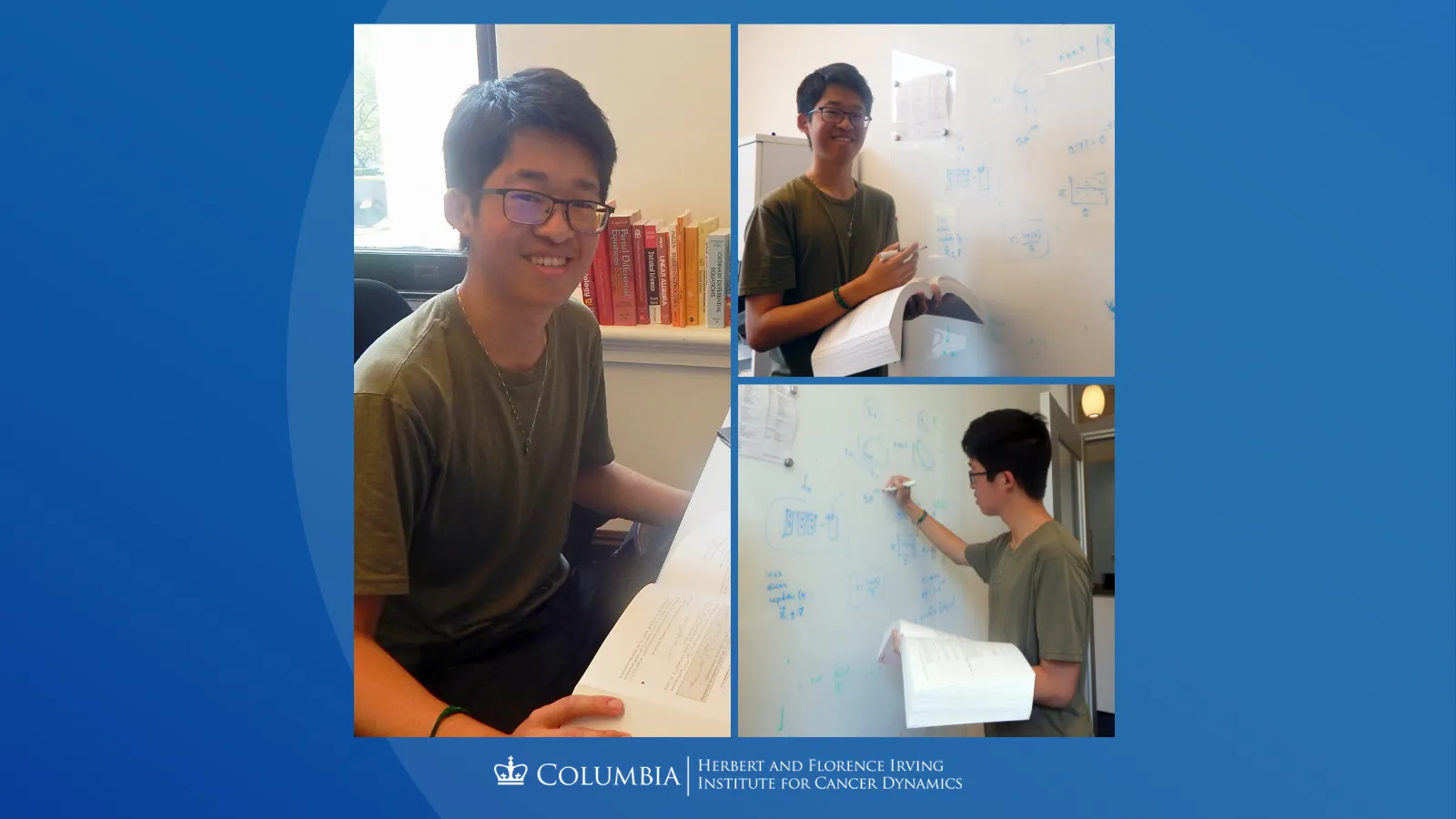
Alan Jiang is a rising junior majoring in Computer Science and Mathematics at Pomona College. He is conducting research that integrates statistical modeling and computational tools to annotate single-cell RNA sequencing data in Dr. Andrew Blumberg’s group.
1/ How did you get interested in science and doing research?
I’ve always been interested in STEM for as long as I can remember, whether through math, physics, or computer science; I just really enjoy thinking about things through a computational, mathematical mindset. Doing something with a positive impact is really important to me, which drove me toward research.
2/ What is your favorite thing about science?
I enjoy the process of breaking something apart and understanding why it works the way it does; I feel motivated to deepen my understanding of the world around me.
3/ What are your plans after receiving your undergraduate degree?
Currently, I feel most interested in pursuing a Master’s in Computer Science or a PhD in Statistics. Either way, I’m definitely looking to attend graduate school pretty immediately and continue engaging in research.
4/ If you could be any scientist, who would it be and why?
I would be myself! I think I am pretty cool and feel eager and confident to make a positive contribution to science.
5/ Tell us a fun fact about yourself.
I think cheese tastes bad.
6/ What do you like to do when you are not in the lab?
I love singing in the choral ensembles at my college and playing piano.
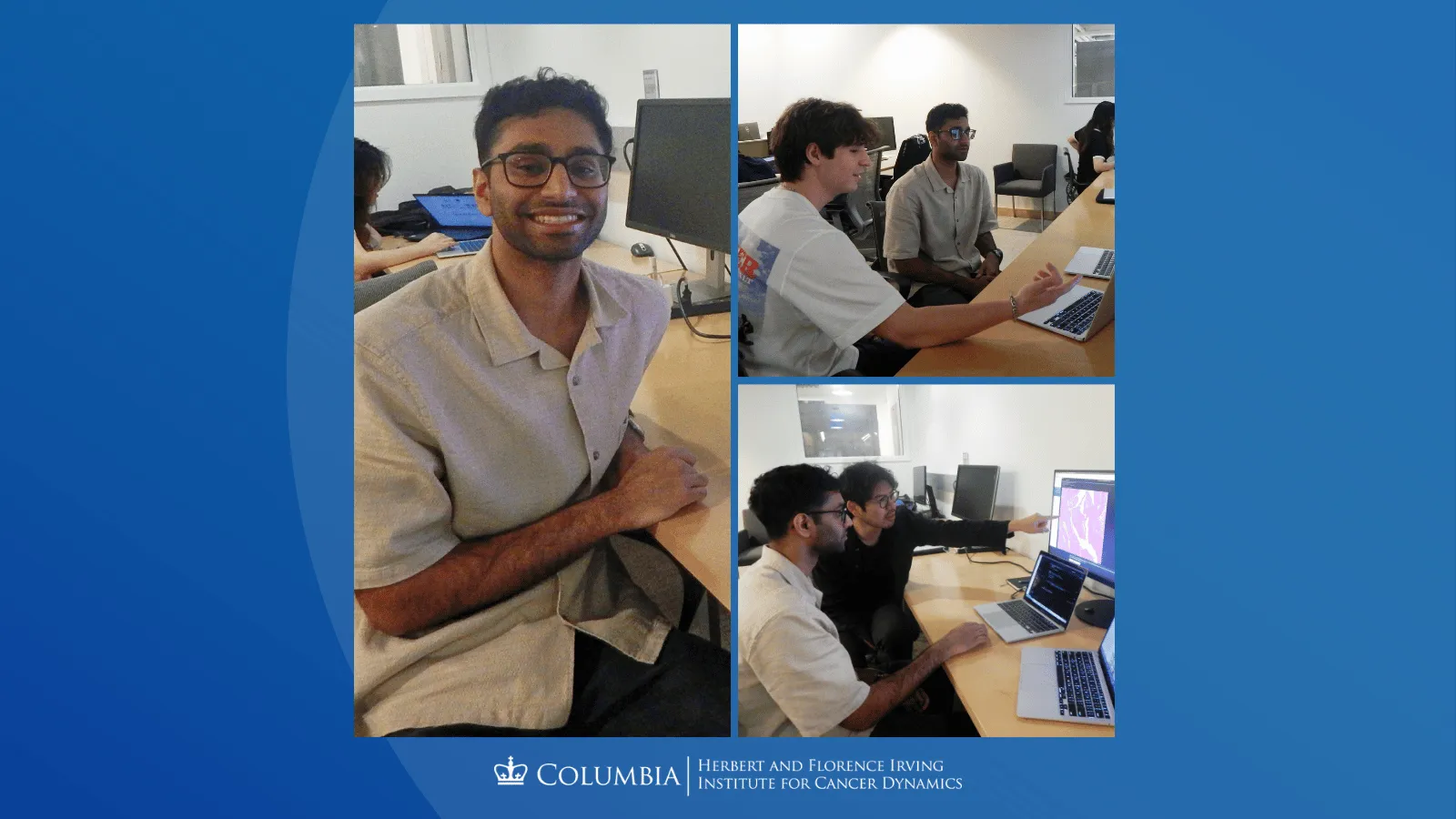
Joel Joseph is a rising senior majoring in Computer Science and Data Science at Arizona State University, mentored this summer by Dr. Sanja Vicković. His research focuses on using computational methods to understand tumor interactions in colorectal cancer.
1/ How did you get interested in science and doing research?
My interest in science began through reading fiction books and watching movies that introduced fictional technologies and ideas. As a child, these stories felt magical, sparking curiosity about our place in the world and how things worked. However, during high school, I often questioned whether science was truly the right fit for me; it was challenging, and far from what I expected. Perseverance gradually showed me that inquiry and technology have incredible potential to transform our lives. These are the closest things we have to magic in the real world, allowing us to help create inventions and make discoveries with profound impacts. My passion solidified during research when I initially began working on DNA nanotechnology. Eventually, I fell into computer science, allowing me to want to use computational methods to help understand biology and to contribute to meaningful discoveries.
2/ What is your favorite thing about science?
My favorite thing about science is that it is driven entirely by curiosity, our desire to understand and explain the world around us, and to use that knowledge to make the world a better place. There is no limit to the questions you can ask or the discoveries you can make. Science encourages exploration, inviting us to investigate further and continually expand our understanding. With each step, we gain new opportunities to innovate and engineer to improve the lives around us, shaping a promising future.
3/ What are your plans after receiving your undergraduate degree?
After graduation, I aim to pursue a PhD focused on applying artificial intelligence to biological research or enter the industry as a researcher/engineer. My ultimate goal is to leverage AI in science to tackle significant biological and medical challenges, contributing to advancements in disease treatment, human longevity, and improvement of human life.
4/ If you could be any scientist, who would it be and why?
If I could embody the qualities of any scientist, I would choose Alan Turing and Jonas Salk. Alan Turing, widely regarded as the father of computer science, revolutionized modern computing through his pioneering work on Turing machines and early concepts in artificial intelligence. His innovative thinking and courage to explore ideas far ahead of his time still lead us today. Jonas Salk, who developed the polio vaccine, is inspiring for his monumental contribution to medicine. His groundbreaking work saved countless lives, and his decision not to patent the vaccine demonstrated an extraordinary dedication to humanity over personal interests. Both Turing and Salk represent the extraordinary impact that scientists can have on society, embodying the idea that progress is built upon the achievements of those who came before and to continue that forward.
5/ Tell us a fun fact about yourself.
A fun fact about me is that I’ve been training in mixed martial arts (MMA), with the goal of competing. It has become a meaningful part of my life, helping me push myself both mentally and physically.
6/ What do you like to do when you are not in the lab?
Outside the lab, I enjoy staying active through MMA training, weightlifting, and spending time outdoors. I also love cooking and trying new foods, reading, and spending time with family and friends.
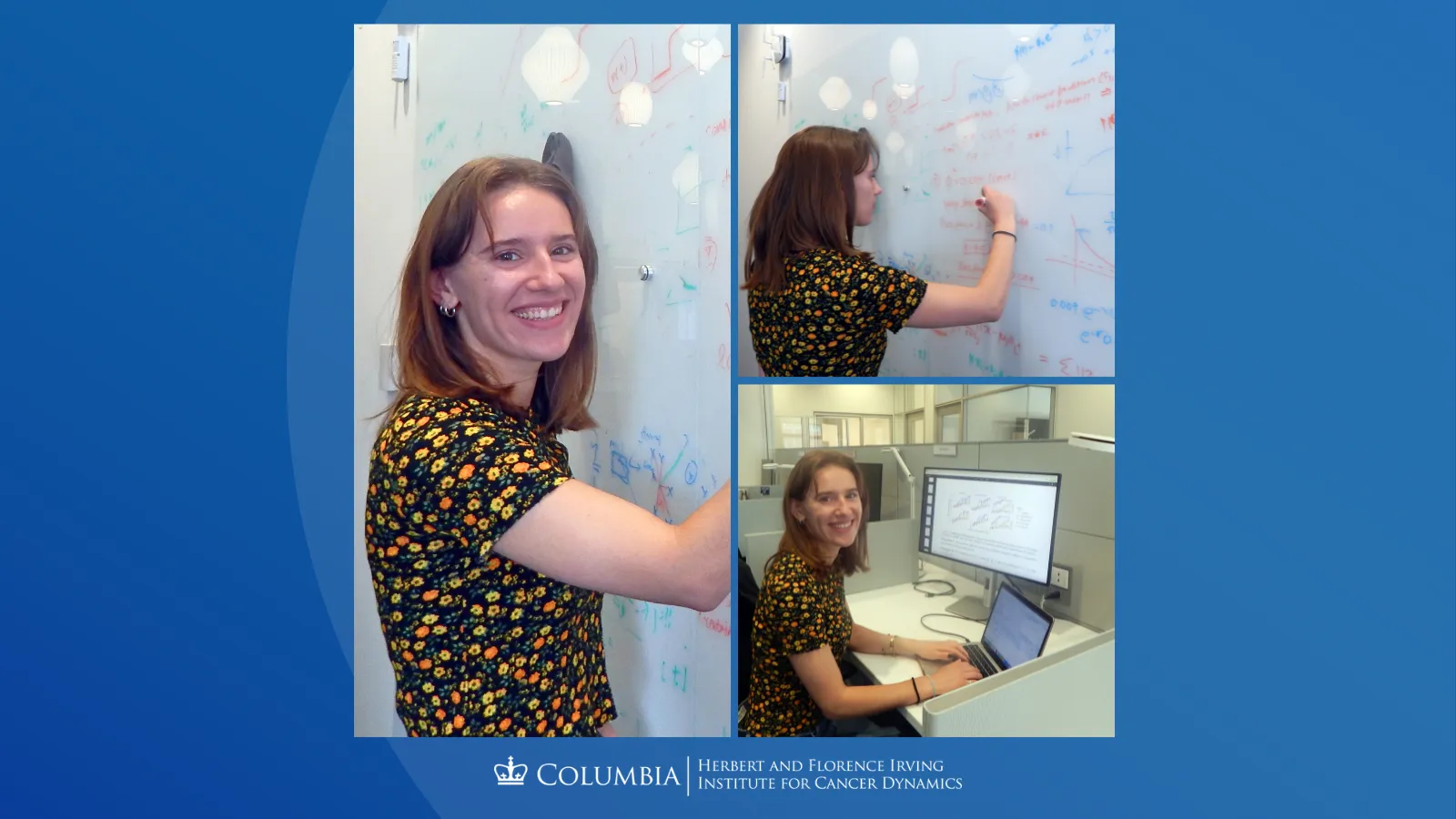
Mariah Loehr is a rising senior majoring in Mathematics with a minor in Statistics and Data Science at Carleton College. She is mentored by Dr. Genevera Allen and is exploring methodologies in machine learning, with a focus on data-driven approaches to understanding complex systems.
1/ How did you get interested in science and doing research?
I have always been drawn to mathematics in particular. I found it satisfying and also incredibly elegant, even at a young age. As I got older, I was drawn to the more applied side of mathematics, and thus was drawn into research that felt particularly human-oriented.
2/ What is your favorite thing about science?
I just really enjoy how it explains the world we live in. From the entire universe to quarks, science gives us a way to understand the marvelous mechanics of the world we live in. It is also such a powerful and essential tool for driving positive world impact.
3/ What are your plans after receiving your undergraduate degree?
A major reason for my interest in this program was to better understand exactly these plans. I do believe I will pursue graduate studies in a statistics-related field, potentially biostatistics or data science.
4/ If you could be any scientist, who would it be and why?
Isaac Newton—imagine inventing calculus and discovering gravity in a single year.
5/ Tell us a fun fact about yourself.
I have started taking organ lessons!
6/ What do you like to do when you are not in the lab?
I love running, and have been so excited about running in Central Park this summer. I also love to read and watch movies, and am hoping to get more into Broadway shows while I am here!
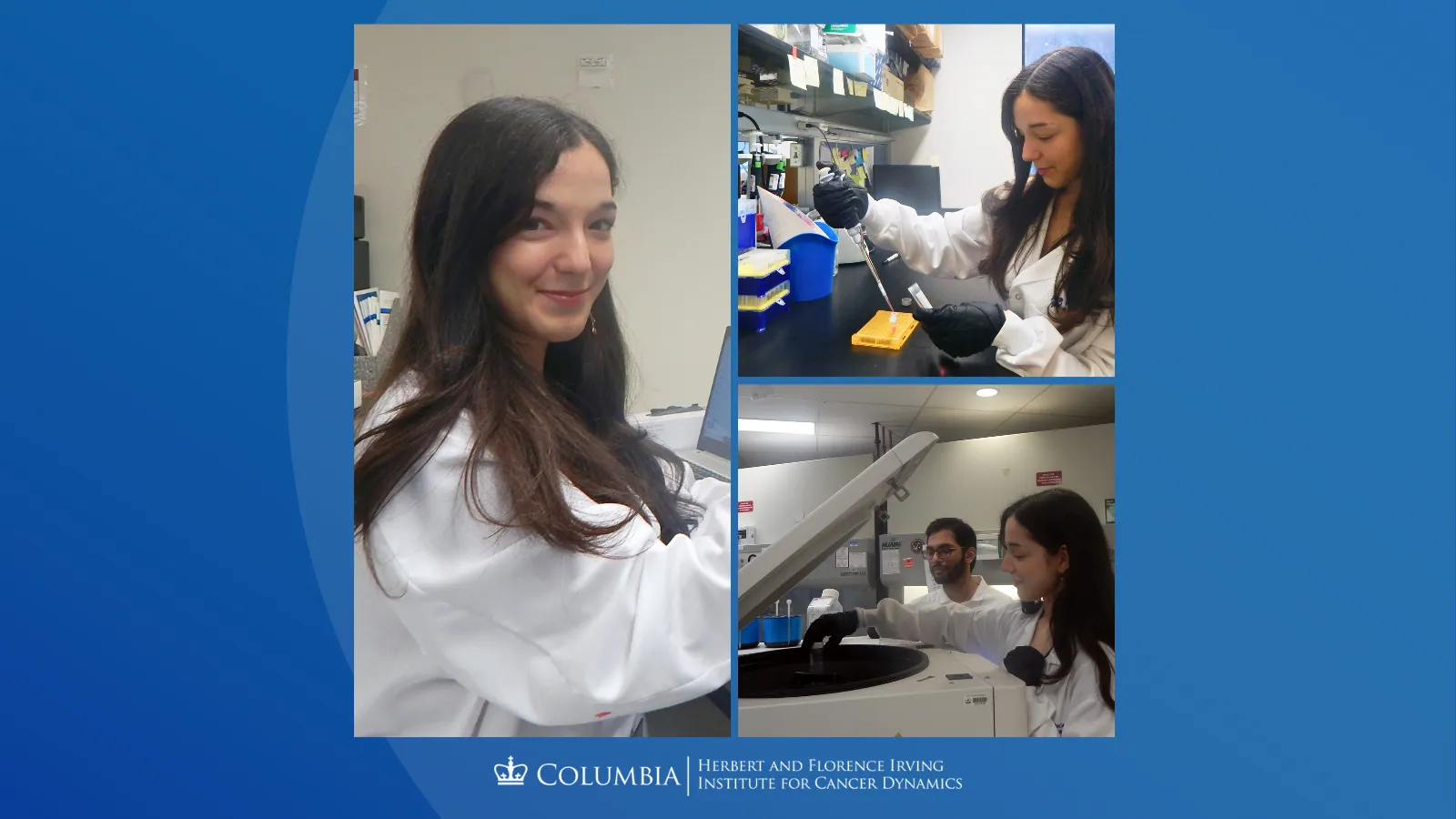
Marina Milea is a rising junior majoring in Biology at the City College of New York. This summer, she is working between the labs of Drs. Elham Azizi and José L. McFaline-Figueroa. Marina is using CRISPR techniques to study mechanisms of immune evasion in cancer.
1/ How did you get interested in science and doing research?
Throughout my early education, I followed an intrinsic desire to help others through healing and scientific knowledge, assuming that the means to achieve this were limited to becoming a healthcare professional. Through formative research experiences, I realized that the practice of medicine is sometimes only as strong as the research behind it. An internship at the Institute of Cancer Research (ICR) in London solidified my decision to pivot towards a career in research, discovering my desire to contribute to the development of treatments and cures instead.
I have found that my mind is never as blissfully busy as it is in a laboratory, and what attracts me most to a career in research is the sheer depth of knowledge one can have in their respective field at the end of it.
2/ What is your favorite thing about science?
I love that there are numerous ways to solve a problem, and for each question you answer, ten more arise. There is no limit in science to one’s curiosity, and for the most part, as a scientist, you have the freedom to choose how to delve deeper.
3/ What are your plans after receiving your undergraduate degree?
My personal experiences persevering through medical challenges have guided me toward a focus on researching understudied diseases affecting women. Following graduation, I aim to pursue a PhD in biochemistry, immunology, or cell/molecular biology to gain a deeper understanding of the molecular mechanisms of disease to advance research in women’s health, and improve health outcomes for those impacted by chronic pain.
4/ If you could be any scientist, who would it be and why?
Rosalind Franklin was one of my early science heroes because her work on the structure of DNA is still taught today despite the lack of formal recognition she received. Her dedication to furthering biological research in a time when she wasn’t valued by society has always been inspiring to me, and a dedication I hope to mirror in my work.
5/ Tell us a fun fact about yourself.
Prior to pursuing a career in research, I planned to be an author. While I have now committed to the sciences, I still use writing as both a creative outlet and to spread awareness of women’s health. Currently, I write for my blog Endo Scholar to compile resources for endometriosis patients.
6/ What do you like to do when you are not in the lab?
To escape from scientific hurdles and mechanistic pathways, reading historical novels and poetry offers a welcome distraction from present day. As a New York native, café-hopping lets me work while looking for the best coffee in the city!
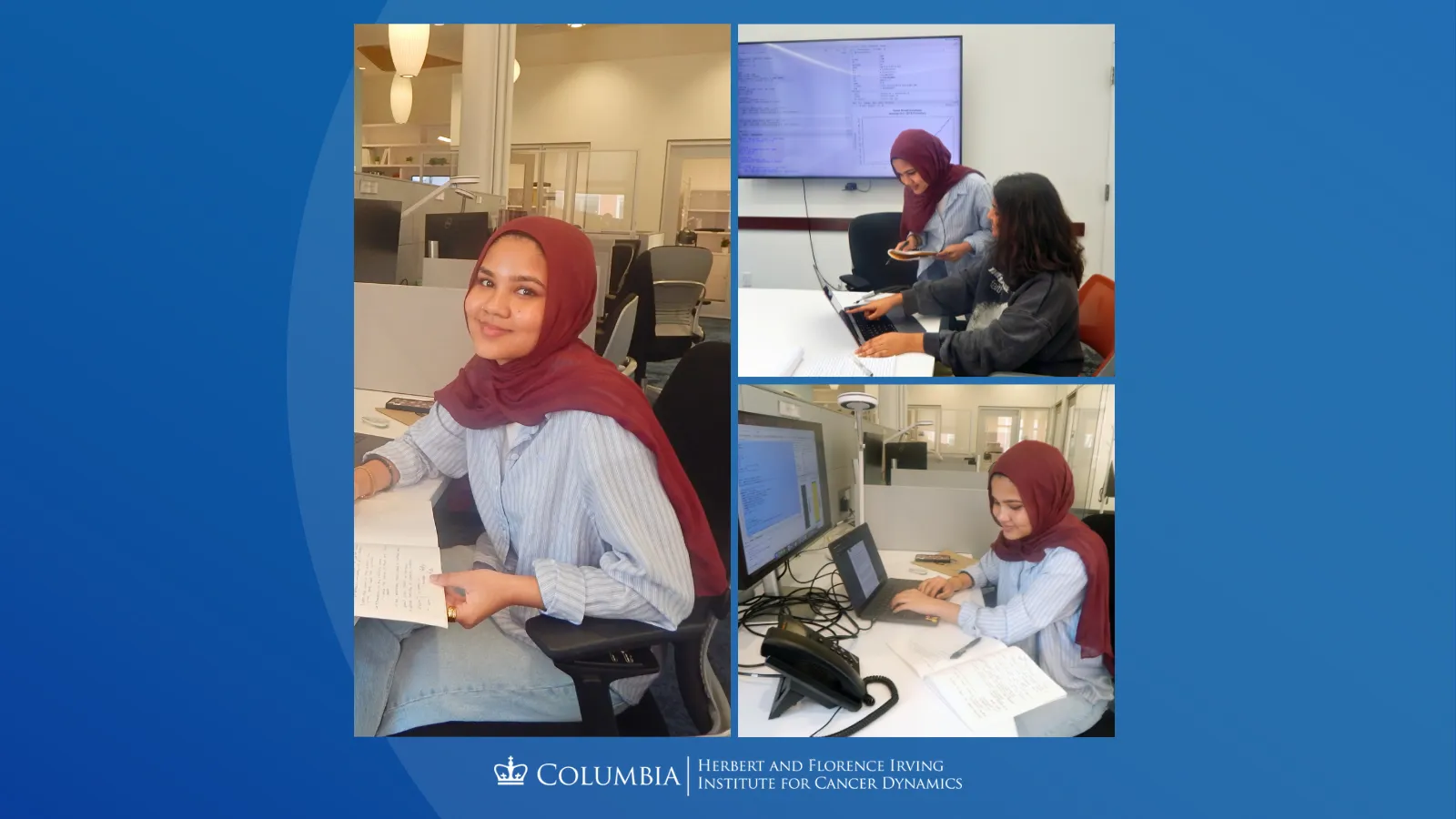
Kazi Nawar is a rising junior at Hamilton College, majoring in Data Science, Math, and Sociology. This summer, Nawar is working with Dr. Simon Tavaré to develop computational models simulating cell population dynamics.
1/ How did you get interested in science and doing research?
My interest started with a broader curiosity about how technology shapes the world around us, but it deepened when I began learning about the ethical implications of algorithms, surveillance, and AI. Research gave me a way to unpack those questions and critically examine how systems that seem neutral can actually reinforce inequality. That’s when I realized I wanted to explore the intersection of science, ethics, and policy more deeply.
2/ What is your favorite thing about science?
What I love most is that science, especially in the context of tech and data, helps make the invisible visible. It allows us to uncover biases baked into algorithms or highlight disparities hidden in datasets. Science gives us tools to question power structures and push for accountability, especially when paired with an ethical lens.
3/ What are your plans after receiving your undergraduate degree?
After undergrad, I plan to attend law school to focus on technology law and ethics. I want to work on issues like digital privacy, algorithmic bias, and equitable access to technology. My goal is to bridge the gap between tech innovation and legal accountability, ensuring these tools are developed and used responsibly.
4/ If you could be any scientist, who would it be and why?
I’d choose Dr. Joy Buolamwini, a computer scientist and founder of the Algorithmic Justice League. Her research exposes racial and gender bias in facial recognition technologies and has helped spark global conversations on algorithmic accountability. I admire how she uses her scientific expertise to drive ethical reform and how she challenges powerful institutions through both data and advocacy. That’s exactly the kind of impact I hope to have through both research and law.
5/ Tell us a fun fact about yourself.
I can do Arabic calligraphy.
6/ What do you like to do when you are not in the lab?
When not in the lab, I enjoy spending time with my friends and family doing activities around the city together.
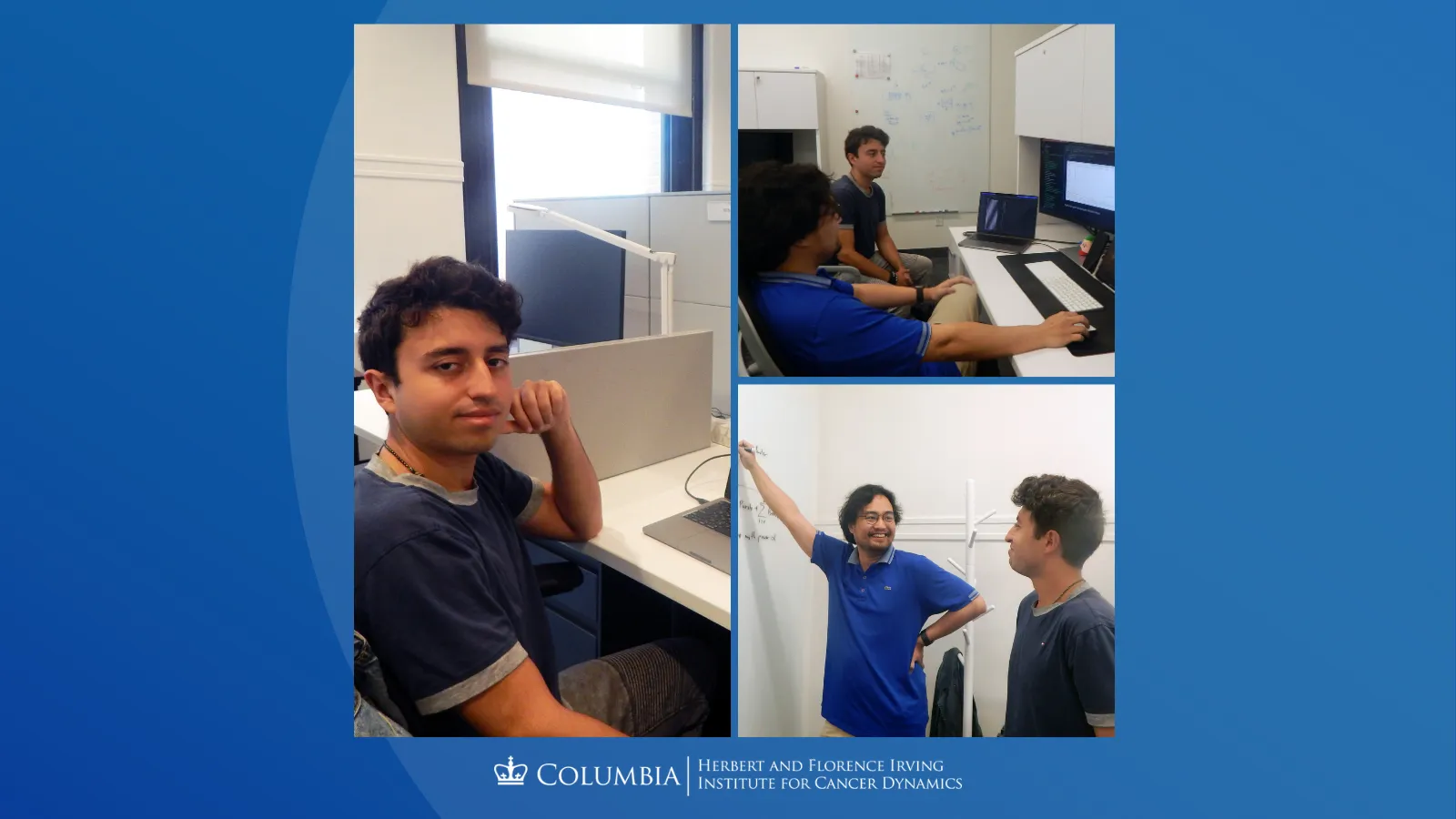
Peter Terranova is a rising senior at Fordham University, majoring in Biochemistry with a minor in Mathematics. He is mentored by Dr. Khanh Dinh. Peter is leveraging machine learning techniques to explore the dynamics of tumor evolution.
1/ How did you get interested in science and doing research?
An awakening moment for me with scientific inquiry was when I read the book The Vital Question by Nick Lane. It was a fascinating read, delving into the mysteries of life and some of its most fundamental features. My interest in medicine has a different story, sparked by the heroic health journey of my late grandfather. I am an ardent believer in the mythos that tomorrow must be better than today, and few places so urgently require this drive as in medicine. What interested me in computational research was the realization that the old way of scientific discovery via analytically tractable reductionism was probably becoming obsolete, especially in biology, where systems are highly complex. Machine learning is a fantastic tool to parse interpretable information from this madness, so I am exploring it.
2/ What is your favorite thing about science?
Maxwell’s equations are probably the coolest thing ever. The idea that everything I see is just the propagation of electric and magnetic pulses borders on the feeling of magic.
3/ What are your plans after receiving your undergraduate degree?
I will be graduating with a bachelor's in Biochemistry and a minor in Mathematics. I plan to attend medical school, become a physician-scientist, and continue doing research. More specifically, I plan to use my mathematics background to explore computational solutions to problems in systems biology. Biology, and medicine by extension, must reconcile its chaotic and holistic structure with statistical modeling, and the stochastic nature of cancer is a rich avenue to explore this idea.
4/ If you could be any scientist, who would it be and why?
I was always fascinated by history. There was an era in the history of science marked by “gentleman-scientists” who were usually of aristocratic background and funded their research as a hobby, paid by estate wealth. Many of these people were also polymaths, meaning that they endeavored in various fields of the arts and sciences. I would somewhat like to be a polymath in a world of increasing specialization. I think there is something uniquely exhilarating about making connections between multiple domains, not just in sharing facts, but in shifting perspectives. That being said, I am not sure if I would want to be him as he lived quite a stressful life, but Boltzmann is a scientist that I strongly look up to. His work simultaneously challenged the preceding perspectives in chemistry, physics, and philosophy.
5/ Tell us a fun fact about yourself.
It is shameful to admit, but the rumors are true: I am left-handed.
6/ What do you like to do when you are not in the lab?
I like to draw Greek statues and scenes from the ancient world.