
Beyond the Algorithm: IICD Explores What’s Next in AI
On Monday, March 16, IICD hosted a half-day symposium, “Next Generation Cancer Research – AI and Computation.” The event brought together researchers from across disciplines for rich discussions on cutting-edge technology.
Through a series of presentations, speakers explored how recent technological advances are shaping the future of statistics, biomedical engineering, and related fields. Dr. Itai Yanai of the New York University Grossman School of Medicine opened with a provocative question: “Can a cell learn?” His talk on adaptive genome regulation in cancer presented findings with the potential to improve future cancer therapies.
As the afternoon continued, attendees heard from Dr. Andrew Blumberg, Professor of Cancer Data Research (IICD), Mathematics, and Computer Science, who discussed the capabilities of artificial intelligence in solving complex mathematical problems. Dr. Bianca Dumitrascu, Assistant Professor of Cancer Data Research and Statistics, expanded on the role of next-generation technologies in advancing single-cell transcriptomics. Dr. Elham Azizi, Associate Professor of Cancer Data Research (IICD) and Biomedical Engineering, concluded the session with a thought-provoking presentation on generative AI models of cellular dynamics and their role in illuminating the tumor microenvironment.
Image Carousel with 5 slides
A carousel is a rotating set of images. Use the previous and next buttons to change the displayed slide
-
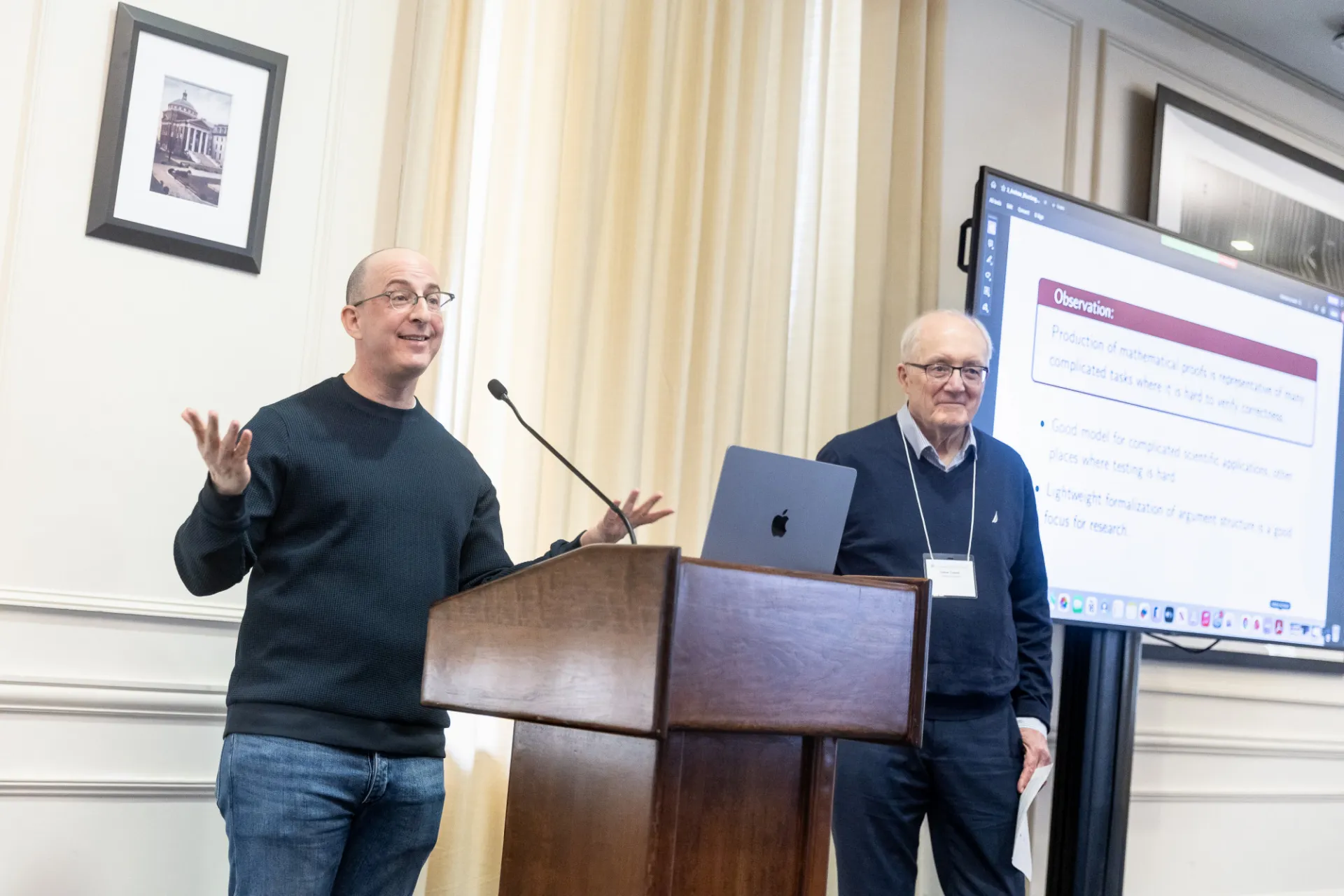
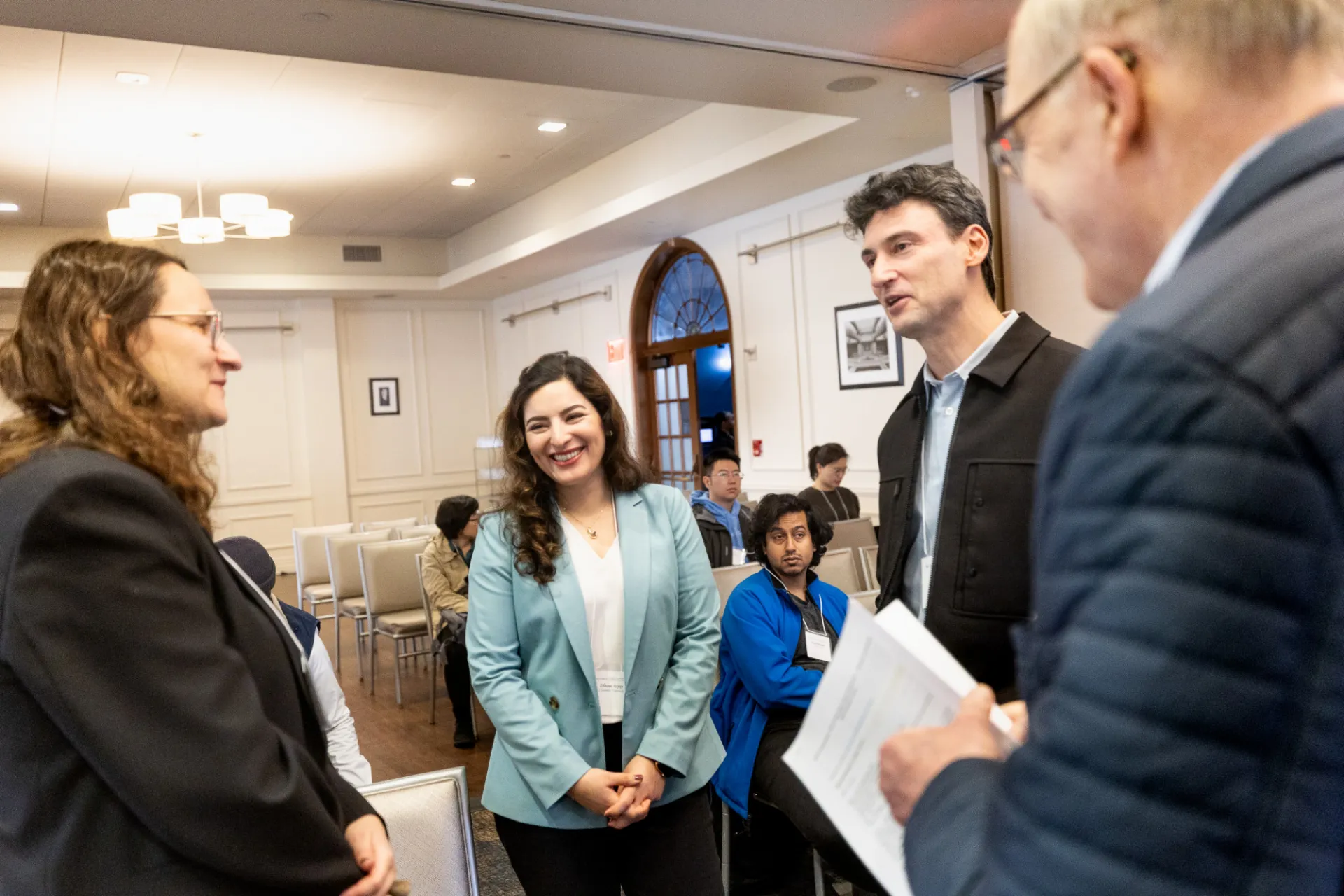
Slide 1: Andrew Blumberg and Simon Tavaré at the 2026 IICD Symposium. Photo Credit: Tim Lee
-
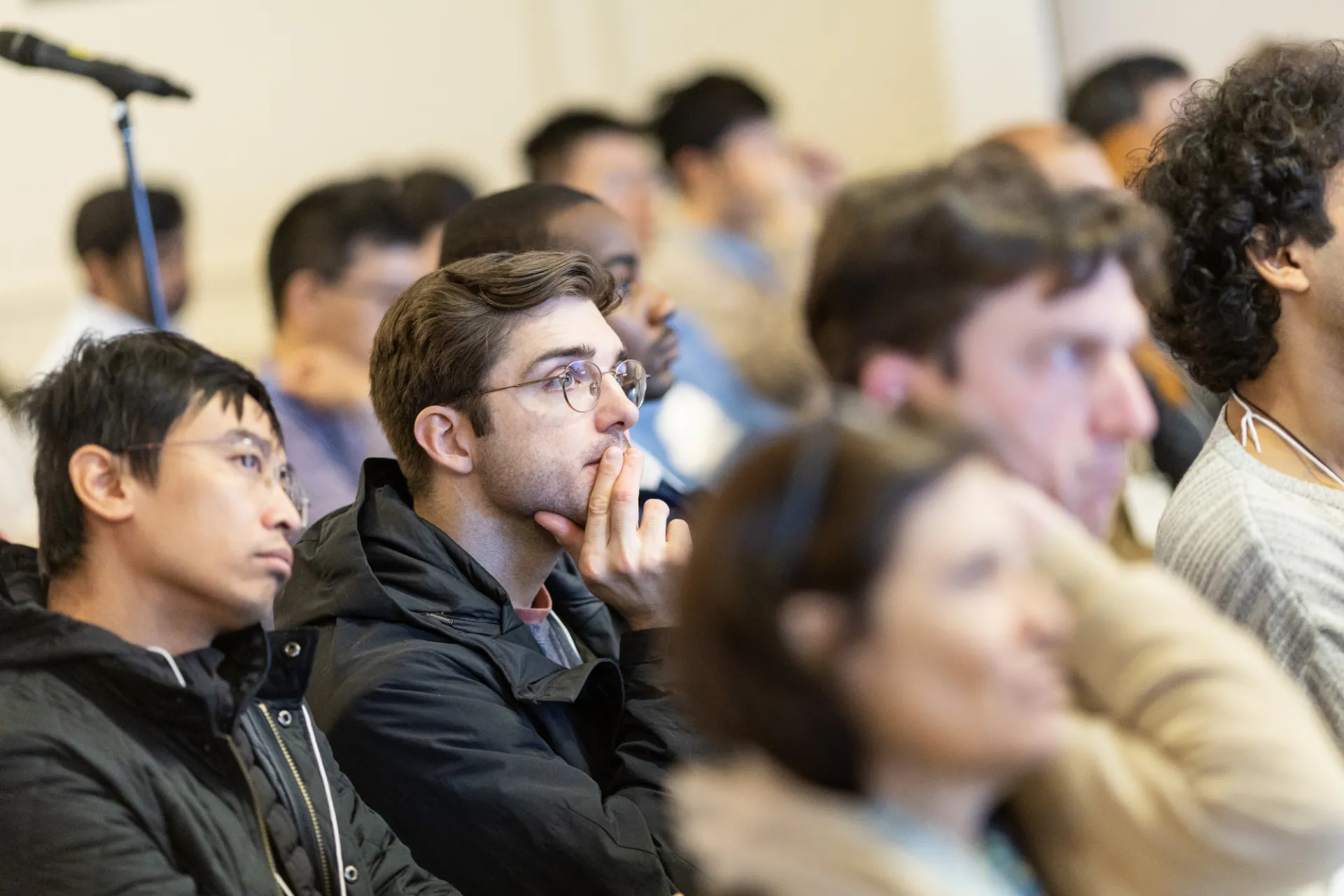
Slide 2: Attendees of the 2026 IICD Symposium. Photo Credit: Tim Lee
-
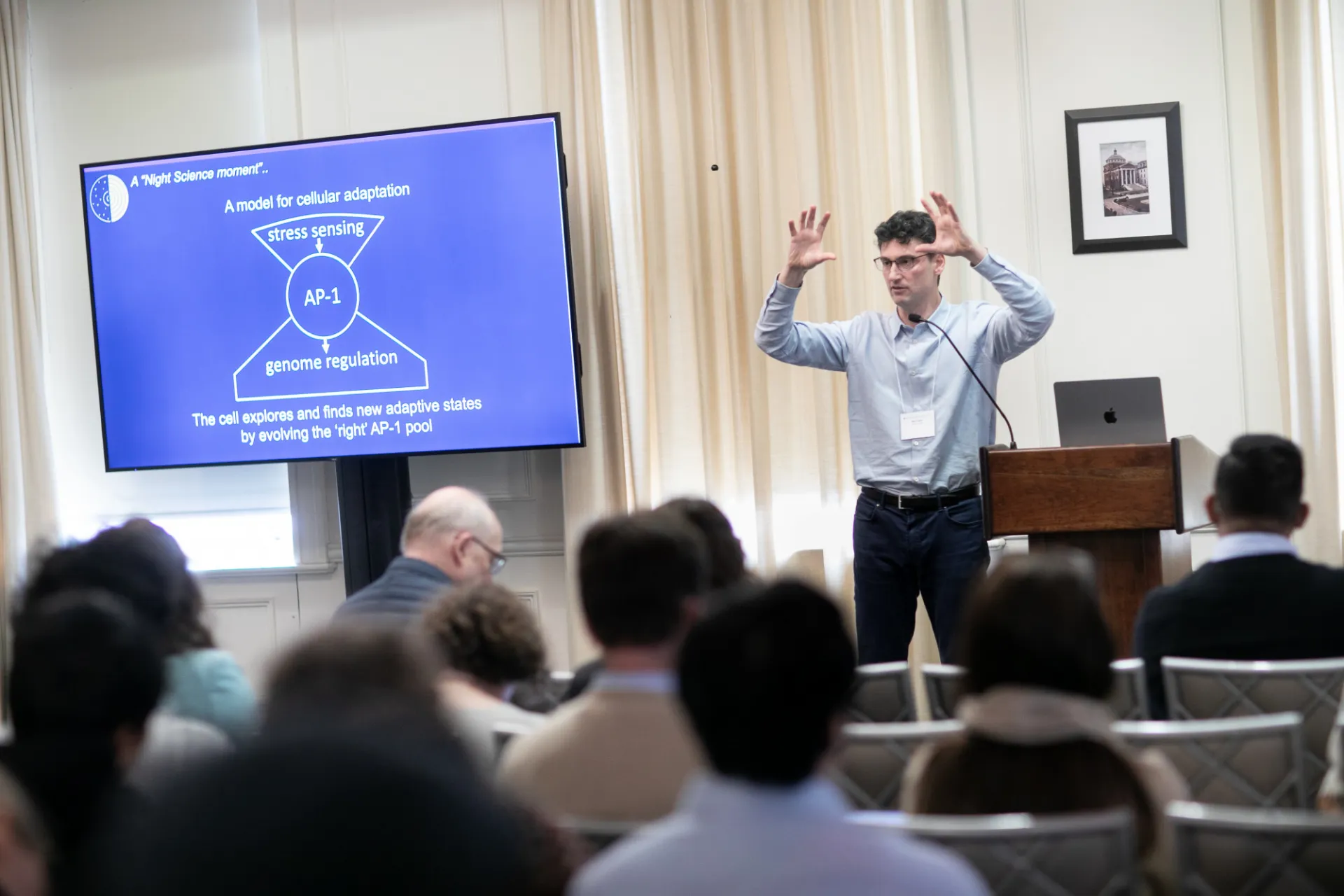
Slide 3: Itai Yanai presents at the 2026 IICD Symposium. Photo Credit: Tim Lee
-
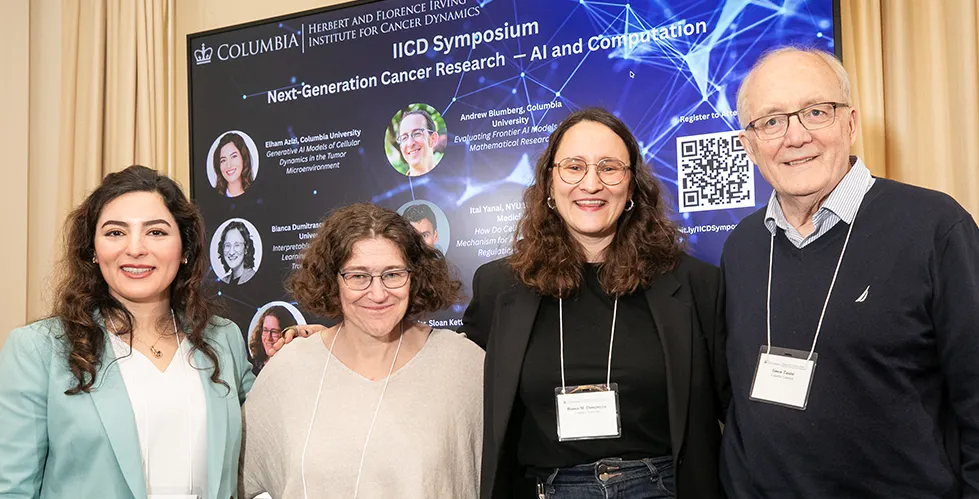
Slide 4: Speakers Bianca Dumitrascu, Elham Azizi, Itai Yanai, and IICD Director Simon Tavaré at the 2026 IICD Symposium. Photo Credit: Tim Lee
-
Slide 5: Keynote speaker Dana Pe'er at the 2026 IICD Symposium.
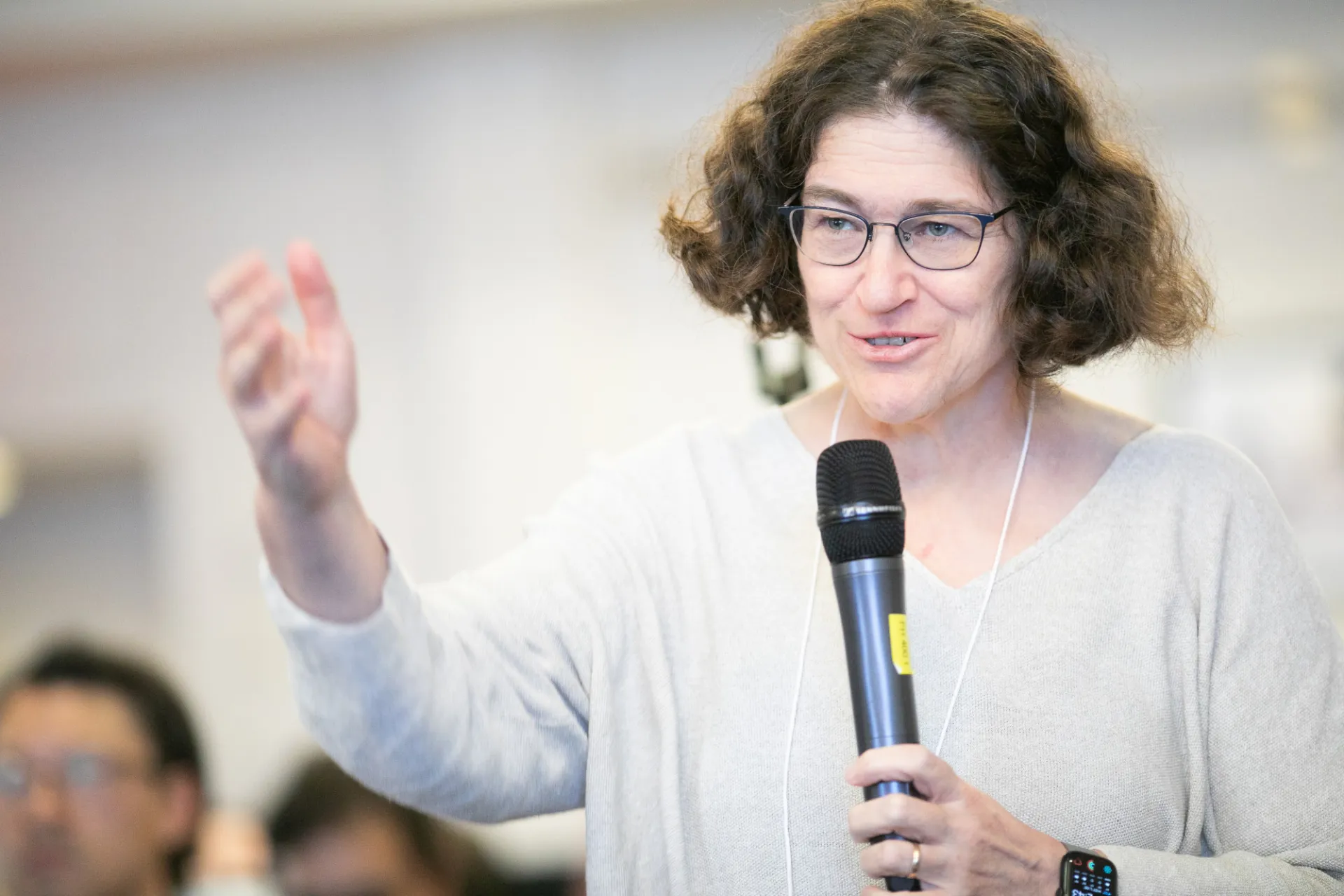
The symposium continued with a keynote presentation by Dr. Dana Pe’er, Chair of Computational and Systems Biology and Scientific Director of the Single-Cell Analytics Innovation Lab at the Sloan Kettering Institute. Building on themes from earlier talks, Dr. Pe’er focused on machine learning approaches such as the Wasserstein Wormhole and their effectiveness in analyzing large datasets. An engaging Q&A session followed, offering attendees deeper insight into ongoing research in Dr. Pe’er’s lab.
Ultimately, the symposium successfully brought together experts to share advancements and foster collaboration, creating a dynamic environment that extended beyond the presentation of data to a shared vision for the future. The progress and innovation showcased highlight the growing integration of computational science and oncology as a powerful paradigm—one with the potential to accelerate the path toward precision medicine.
“This symposium exemplifies the Institute’s mission: to convene experts from biomedical engineering, computer science, mathematics, statistics, biochemistry, and more, who integrate mathematical and computational approaches with cancer research to advance our understanding of cancer biology. This same diversity of perspectives was reflected in the audience as well.”” said Simon Tavaré, IICD Director and host of the symposium.
Check out symposium highlights on our X and Bluesky.
View the full photo gallery here. Photo credit: Tim Lee.