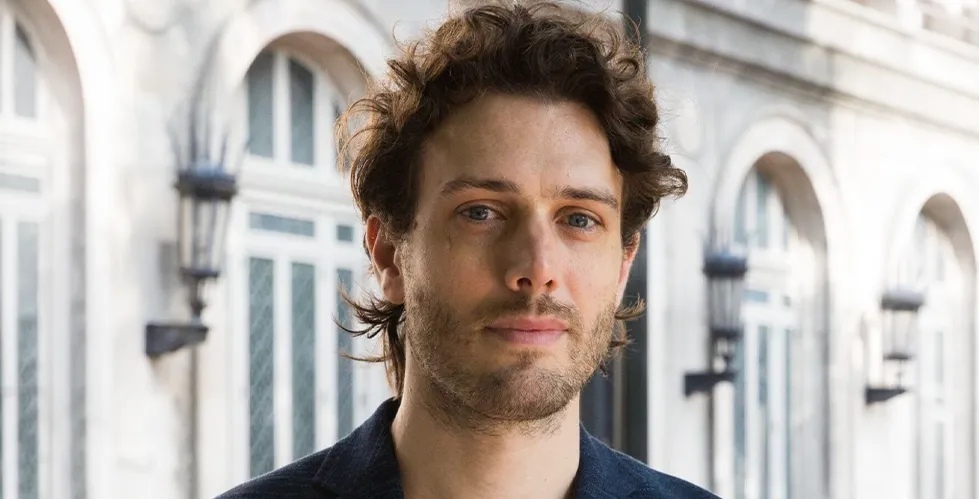
Meet Dr. Jellert Gaublomme, Assistant Professor of Biological Sciences, Department of Biological Sciences. His work focuses on developing new technologies to study how genetic changes shape cancer cells—both in culture, and within the complex environments where tumors grow.
By combining gene editing with spatial analysis, the technology his lab developed offers a more complete picture of how cancer behaves and interacts with surrounding tissues. The Gaublomme Lab developed an optical pooled CRISPR screening approach—one of the first of its kind—that measures the abundance of and spatial arrangement of biomolecules.
“When starting the lab, I wanted to develop approaches that could measure single-cell phenotypes in the tumor microenvironment, ” Dr. Gaublomme explains. “In addition, the ability to perturb genes helps understanding the regulatory networks and intercellular communication mechanisms that cancer cells use, and potentially identify vulnerabilities that could be targeted therapeutically.”
Recent work from the Gaublomme Lab has pushed these capabilities even further. In a recent publication, the lab used gene-editing techniques to generate a wide range of genetic variants, including those whose effects are not yet well understood.
“We sought to characterize the effect of the variant beyond its effect on viability,” Dr. Gaublomme summarizes. “In particular, we evaluated how the variant affected the DNA damage response, which in some cases enabled us to annotate some variants of uncertain significance as likely pathogenic.”
Although his research is not directly focused on translational efforts, Dr. Gaublomme’s research has important implications for the future of cancer treatment. By helping to clarify how genetic variants affect cellular pathways, this work can contribute to a better understanding of which therapeutic strategies may be most valuable.
More broadly, the ability to study how genetic changes influence not just cancer cells, but also their interactions with the immune system and other components of the tumor microenvironment, opens the door to insights that could inform more targeted and precise approaches to therapies.
Looking ahead, Dr. Gaublomme is motivated to make further strides in his research. “A frontier we’re excited about is evaluating the behavior of perturbed cells in a 3D whole organ context, such that a more complete picture emerges of the tumor microenvironment that can be intractable by looking at 2D tissue sections,” he shares. In this case, technological innovation will drive discovery and provide a comprehensive picture to the broader context of his research.
During Cancer Research Month, research like Dr. Gaublomme’s emphasizes the interdisciplinary nature of the field. Genomics is one of many areas that provides a hopeful outlook for future patient therapies, with researchers making advances each day.