
Squidiff: A Diffusion AI Model to Accelerate Precision Medicine
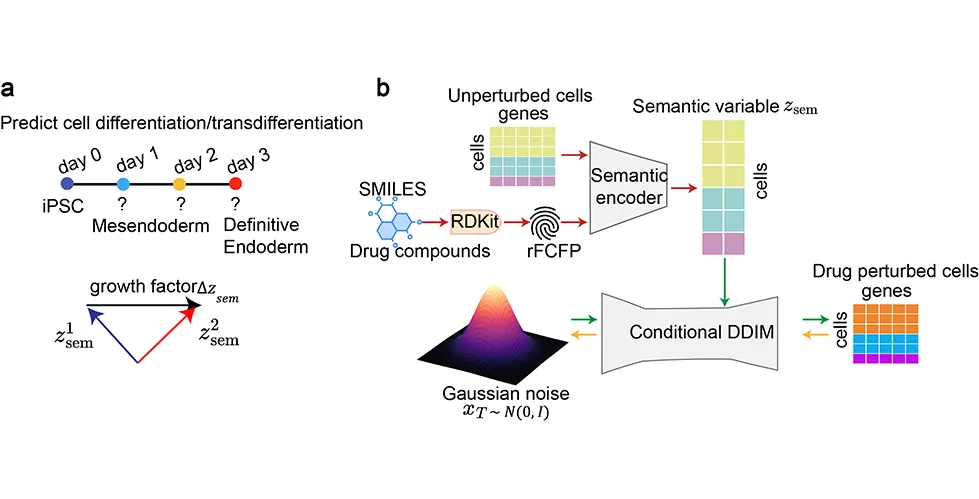
The Azizi and Leong labs at Columbia University and the Zou group at Stanford University have developed a generative artificial intelligence model named Squidiff to predict cellular responses to developmental and chemical cues and accelerate precision medicine. Squidiff goes beyond existing models by enabling scientists to identify potential drug targets and gain deeper insight into disease mechanisms. Their work was recently published in Nature Methods.
Understanding Cellular Response
Every cell in our body is constantly responding to signals like stress, injury, and disease. Cells in our bodies are also capable of responding to drugs and treatment modalities to alleviate damage to cells and tissues. Understanding how these changes happen is key to designing better treatments.
Traditionally, scientists study these responses through many costly and time-consuming experiments. However, experimentally testing all possible perturbations is not feasible. To overcome these limitations, researchers are turning to artificial intelligence.
Introducing Squidiff, a Diffusion AI Model for Cellular Response
The Azizi and Leong labs, in collaboration with researchers at Columbia University, Stanford University, and the University of Buffalo, have developed Squidiff, a generative AI model, which provides a powerful new way to model these changes virtually. Squidiff stands for Single-cell QUantitative Inference of stimuli responses by a DIFFusion model. The conditional diffusion-based model is able to learn from millions of single-cell measurements and predict how cells will respond to new genetic or chemical perturbations they have never encountered before.
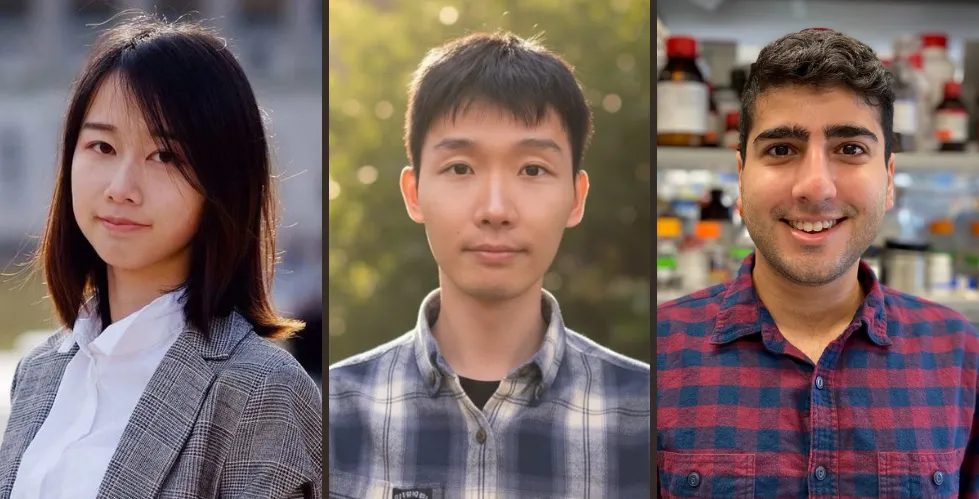
“We demonstrated that the model was able to successfully predict three unique gene perturbations: how stem cells mature into early tissue types, how cancer cells respond to drug combinations, and how blood vessel organoids respond to radiation and radioprotective treatments,” explains Siyu He, one of the lead authors. “Remarkably, the model could even predict the effect of new compounds by learning from their chemical structures and doses.”
How Squidiff Impacts Precision Medicine
Squidiff enables “virtual experiments”, allowing researchers to explore thousands of potential drug treatments and genetic interventions in silico before performing real experiments. This can translate into broad applications across biomedical discovery and translational medicine.
The team demonstrated that Squidiff can predict how cancer cells adapt or develop resistance to treatment or forecast cellular responses to new compounds, informing further drug discovery and precision medicine.
Beyond traditional biomedical applications, the team explored Squidiff’s potential even further as Yuefei Zhu reveals: “We used a unique case scenario of the effects of space-like radiation regimens to mimic what astronauts may face in long-range missions to Mars. Squidiff was able to accurately predict the effects of radiation injury, in addition to mitigation by a common radioprotective agent, which may help researchers better develop proactive treatments for acute radiation syndrome in future space missions.”
“By bridging AI and molecular biology, Squidiff helps researchers understand the complex rules of cell behavior and accelerate the development of new therapies, especially for heterogeneous diseases like cancer,” describes Daniel Naveed Tavakol, co-author of the study.
Looking Ahead
Next, researchers plan to evolve Squidiff into a foundation model for virtual cells, meaning they will train the model on large, diverse datasets from multiple tissues and species. “If successful, the model could simulate more complex biological processes such as organ development, disease progression, or drug development,” says Tavakol.
Publication Details
The study was a collaborative effort between the labs of Elham Azizi (Irving Institute for Cancer Dynamics and Department of Biomedical Engineering), Kam W. Leong (Departments of Biomedical Engineering and Systems Biology) at Columbia University and James Zou (Department of Biomedical Data Science) at Stanford University.
Siyu He (Azizi/Leong labs), Yuefei Zhu (Leong lab), and Daniel Naveed Tavakol (Vunjak-Novakovic lab) contributed equally to the project. The paper was published in Nature Methods (DOI: 10.1038/s41592-025-02877-y).