
A Summer of Discovery: Looking Back at IICD’s 2026 Training Programs
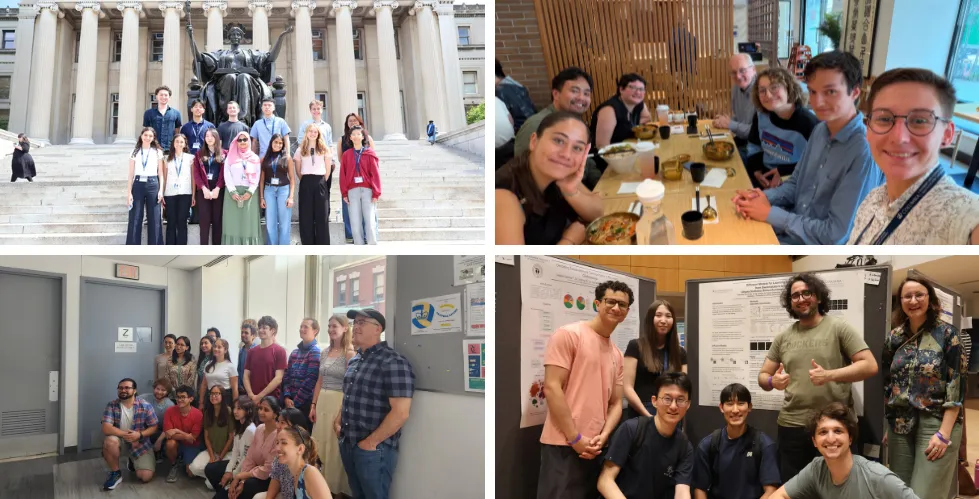
This summer, the IICD was bustling with collaboration and community. From welcoming undergraduate and international student researchers, to hosting interdisciplinary workshops, the Institute spent the past months fostering both scientific innovation and the next generation of cancer researchers.
A Record Breaking SRP Cohort
This year's Summer Research Program welcomed 13 undergraduate students from colleges and universities across the country, making it the program's largest cohort ever since its inception in 2022. Selected from a highly competitive applicant pool, the students joined research groups throughout IICD to gain hands-on experience in interdisciplinary cancer research.
Over the course of the program, students contributed to ongoing projects while developing technical skills, attending seminars, participating in professional development workshops, and connecting with researchers across Columbia University. The experience concluded with a symposium hosted by the Columbia University Pathways Program, where the interns shared the results of their research with mentors, peers, members of the Columbia University community, and other guests.
The SRP was, for some students, an introduction to research, and provided an opportunity for the interns to explore what a career in quantitative cancer research can look like, while building lasting relationships with mentors and fellow researchers.
“Overall, this program was an amazing experience,” describes SRP intern Ally O’Shea. “It gave me the opportunity to participate in research in a new and exciting field while providing me with the resources and support needed to succeed. Everyone was incredibly welcoming and encouraging, which made it easy to fully immerse myself in the research experience. The program also provided invaluable opportunities to strengthen my scientific communication skills through research posters and presentations, skills that I will carry with me into graduate school and throughout my future career.”
International Collaboration
Simultaneously, the IICD hosted 6 students from École Polytechnique. The program started in April, giving the visiting interns the opportunity to delve deeper into their lab’s research projects as they prepare for Masters’ and PhD programs.
In the past several months, the Alliance interns became fully integrated into IICD research groups, contributing to projects spanning artificial intelligence, machine learning, cancer genomics, protein design, spatial biology, and mathematical modeling. Working closely with mentors, they gained firsthand experience conducting collaborative research. Additionally, throughout the duration of their internships, students became immersed in IICD programs during the academic year, including seminars, monthly research meetings, and more.
The program not only provided valuable research experience but also strengthened the connection between Columbia University and École Polytechnique, fostering the exchange of ideas across institutions and disciplines.
Workshop
In addition to hands-on research, this summer offered numerous opportunities for the broader scientific community, such as an Intensive Workshop led by IICD faculty members Elham Azizi and Andrew Blumberg. “Generative AI and Optimal Transport for Single Cell Data Integration” brought together researchers to explore emerging approaches at the intersection of mathematics, artificial intelligence, and cancer biology.
“This workshop gives you a peek into the exciting new world that we as computer scientists, biologists and in general scientists are trying to discover for our excitement and for humanity in general,” shared Sarthak Arora, a workshop participant. “These few days gave one the experience of appreciating not just computational techniques in biology but the mathematics behind it.”
During the workshop, participants also heard from guest speakers such as Drs David Knowles, Ritambhara Singh, Cassandra Burdziak, and Aidan Daly. In addition, the workshop concluded with a keynote lecture by Dr. Wesley Tansey (MSKCC). For student researchers, events like these provided a valuable glimpse into how scientific discoveries are shaped through diverse perspectives.
Together with seminars, professional development events, and research presentations, the workshop reflected IICD's commitment to creating a dynamic learning environment where researchers at every stage can engage with cutting-edge science.
The Lasting Impact of the Summer
All together, this summer's programs and events showcased what makes IICD unique: a collaborative community where researchers across disciplines come together to tackle complex questions in cancer biology while mentoring the scientists of tomorrow. As students return to their home institutions and new partnerships and interests continue to grow, the impact of these programs will continue long after they’re over.