
Building the Next Generation of Scientists: Education and Outreach at IICD
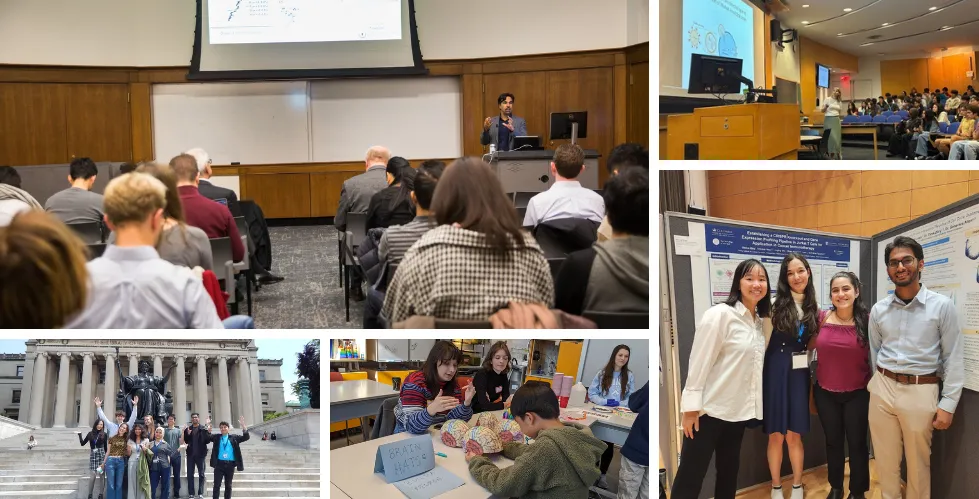
In its pursuit of scientific discovery, the Irving Institute for Cancer Dynamics (IICD) is committed to interdisciplinary collaboration and learning across research areas. However, the impact of the Institute is not confined to its home within Columbia University’s Schermerhorn Hall.
Director Simon Tavaré emphasizes the Institute’s mission to amplify its work. “Through education, outreach, and open dialogue, we aim to make scientific discovery accessible to learners of all ages and to strengthen the connection between research and the communities it serves.”
Much like the scope of its research, the Institute’s outreach programs are always evolving. IICD has engaged over 3,300 participants across a robust ecosystem of programs since 2021. Whether high school students or university faculty members, any audience can learn with the IICD community.
Learn more about how education and outreach programs are expanding the impact of the Institute.
ENGAGING THE SCIENTIFIC COMMUNITY
IICD hosts seminars, symposiums, and workshops open to the Columbia community, to researchers outside of Columbia, and to the public. These events develop and deepen participants' knowledge of fields or methods outside their immediate areas of expertise.
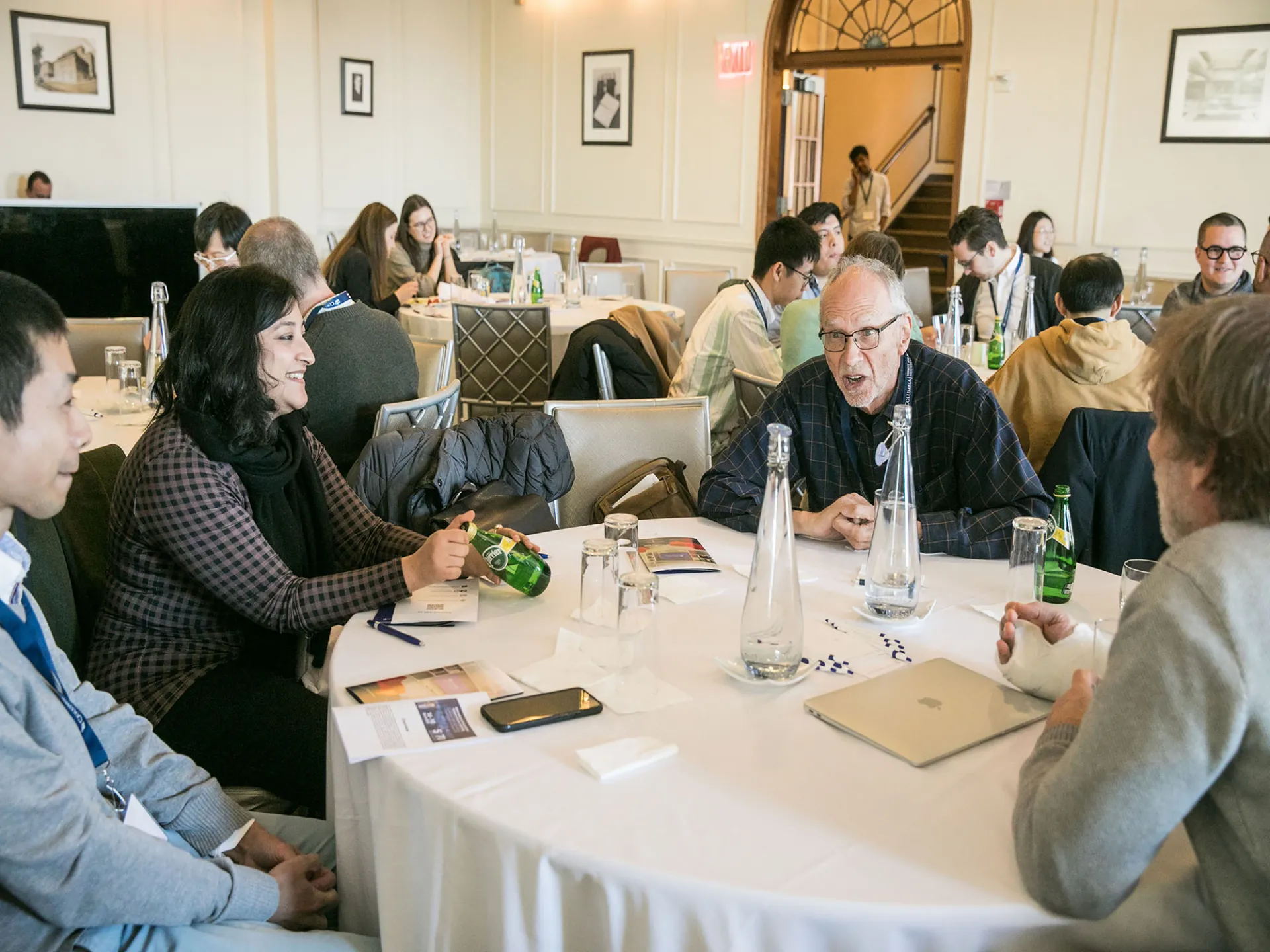
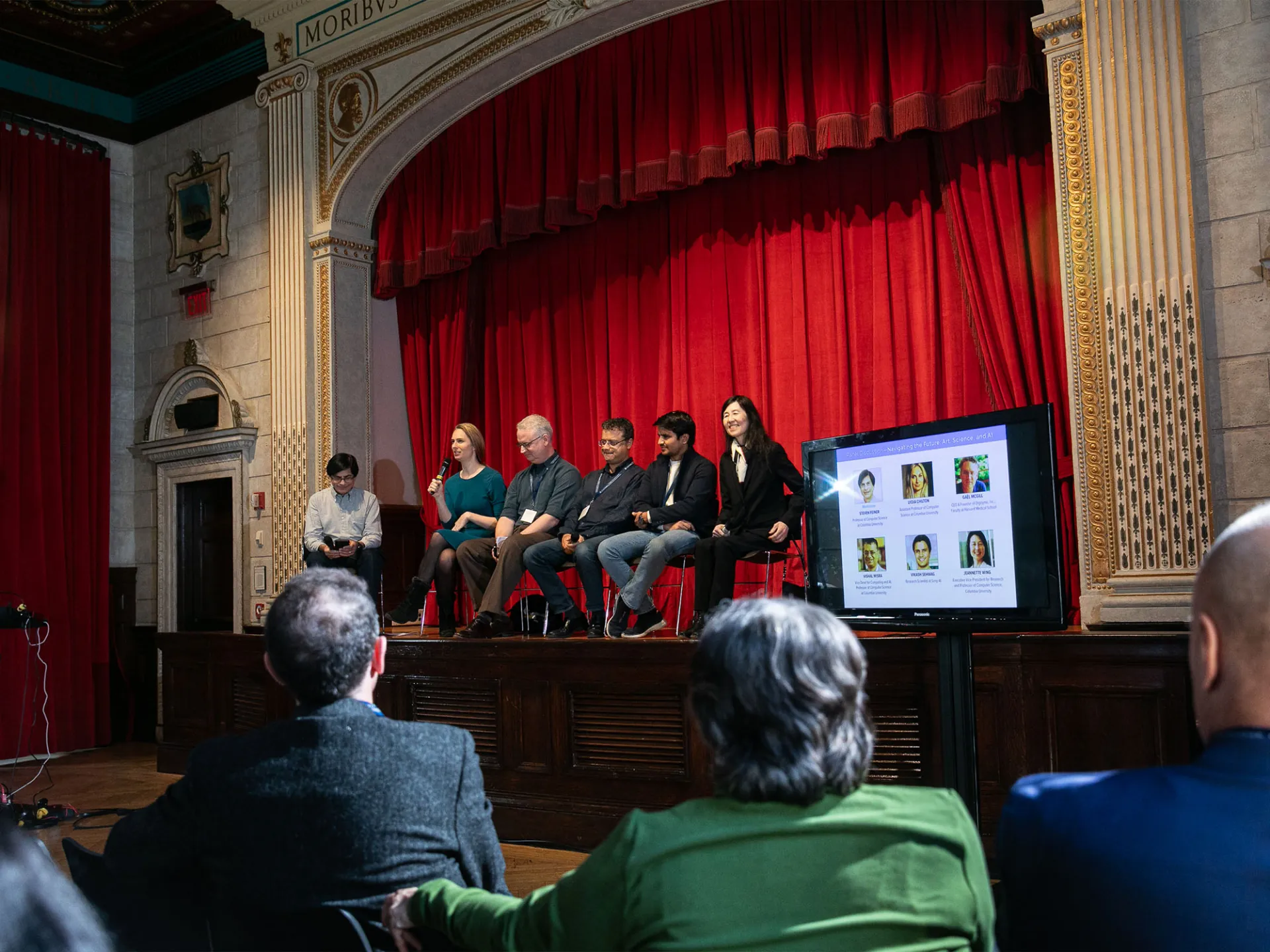
IICD’s 2024 symposium, “Visualizing Science: The Impact of Art on Scientific Discovery,” attracted over 150 participants, who attended panel presentations and connected over exhibitions of submitted artwork. The symposium fostered vibrant cross-disciplinary exchange and directly inspired the first IICD Art and Science Competition.
Beyond its annual symposium, the Institute makes interdisciplinary connections possible year-round. “The IICD monthly research seminars have become the main way I engage with speakers outside of Columbia, thanks to the intimate seminar series setting and opportunities to meet the speakers,” shares Mathini Vaikunthan, a PhD student. “It has often brought extremely relevant and timely literature to my own research to light, and I always find myself stretching to learn topics outside of my field, which is extremely enriching.”
The success of these programs also transpires within the internal IICD community during monthly research meetings. These informal presentations bring members together, promoting conversation and increasing networking among the IICD.
IMMERSING RISING SCHOLARS
The Summer Research Program (SRP) for Undergraduates is one of the Institute’s signature outreach programs, fostering meaningful research experiences for emerging scholars. The SRP is a 10-week research opportunity for non-Columbia undergraduate students to perform cutting-edge research at the intersection of cancer research and mathematical sciences.
SRP program applications have more than quadrupled since 2021, and this number is only growing. Part of the SRP’s incredible growth has been achieved through collaborations with other programs. These partnerships include the Columbia Summer Undergraduate Research Experiences in Mathematical Modeling, the Columbia University Pathways Programs (CUPP). Additionally, the SRP has initiated a collaboration with the S Jay Levy Fellowship at The City College of New York, hosting students over the past three years who have continued their research long after the program was over.
In response to alumni feedback, the Institute established the SRP Emerging Scholars Award last summer, which offers funding to labs that wish to extend the interns’ work beyond the formal program period.
IICD researchers, such as Dr. Lingting Shi, a postdoctoral researcher in the Azizi and McFaline-Figueroa groups, are proud to nurture the next generation of scientists: “It has been a privilege to mentor three generations of SRP interns, watching them grow as scientists while building a supportive community through learning, teaching, and collaboration,” reflects Dr. Shi.
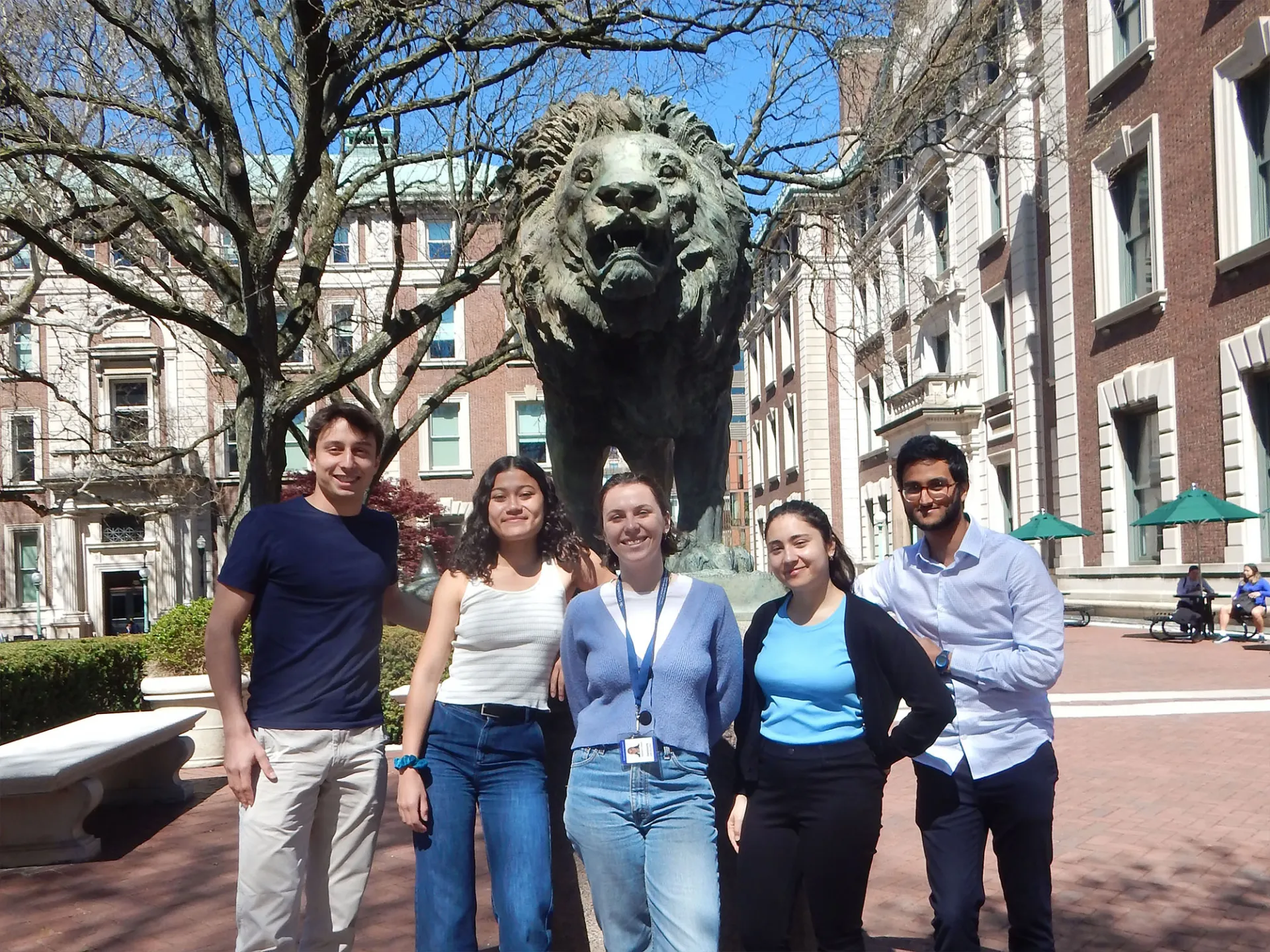
Besides the SRP interns, the Institute has also hosted interns from the École Polytechnique through its relationship with the Alliance Program since 2022. The internships last about four months, and provide students with the opportunity to work in the labs of IICD members and make strong connections in their research areas. This partnership is yet another example of the Institute’s investment in the next generation of scientists.
Image Carousel with 4 slides
A carousel is a rotating set of images. Use the previous and next buttons to change the displayed slide
-
Slide 1: IICD Symposium: Mathematical and Computational Methods in Cancer and Biology (March 2023)
-
Slide 2: Alliance (2024)
-
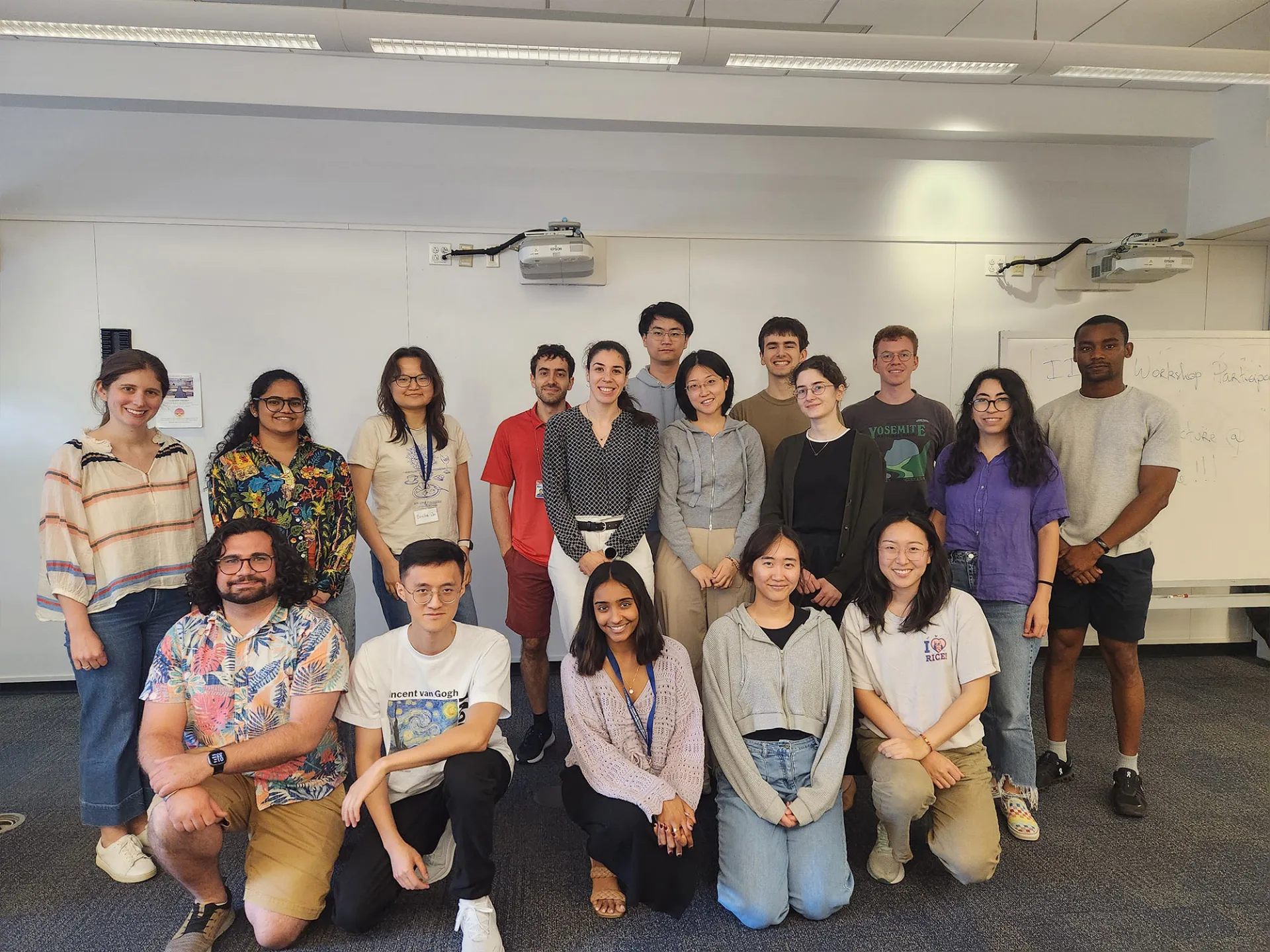
Slide 3: Intensive Workshop (2025)
-
Slide 4: Visualizing Science Symposium: The Impact of Art on Scientific Discovery (November 2024)
INSPIRING EARLY LEARNERS
In the Fall 2025, the Institute launched a new collaboration with STEM Starters, a Columbia graduate student-led science outreach organization. Through free monthly events, STEM Starters offers hands-on science workshops for local elementary and middle-school students and their families in Harlem.
IICD’s partnership with STEM Starters is not its first engagement with the K-12 population. Our researchers periodically mentor high school students, such as Dr. David Tourigny, who mentored Thomas Cong. Cong later placed second in the 2024 Regeneron Science Talent Search. IICD also reaches high school students on a wider scale, having presented to over 200 students during the Summer High School Academic Program for Engineers last August.
Going forward, the Institute is eager to expand upon and create new K-12 programming in its efforts to make science accessible to all students.
LOOKING AHEAD
Through its many programs and partnerships, IICD is building pathways into the field of cancer dynamics for learners at every stage. These programs don’t just share knowledge—they create connections, spark new curiosity, and widen access to discovery.
“We have built initiatives that cultivate future cancer researchers and make science accessible to our broader community,” says Dr. Lorenza Favrot, Assistant Director of Outreach and Communication. “It’s been inspiring to see our learners grow, and I am grateful for the support and collaboration across the Institute that made this work possible.”
As IICD’s outreach continues to evolve, it will keep strengthening the community behind the science—and the science itself.