
Research Highlights of 2025
As 2025 comes to a close, we look back on a year of innovation and discovery at IICD. These nine research spotlights showcase our researchers’ continued commitment to advancing cancer research.
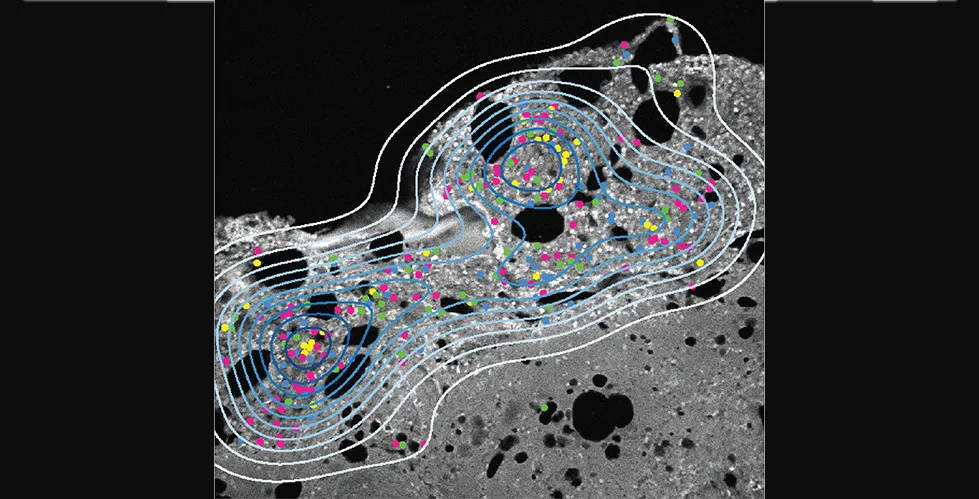
Dr. Elham Azizi’s group made a pivotal discovery in the field of cancer immunotherapy. In a paper published in Science Immunology, the team identified a specific population of immune cells that play a critical role in successful treatment of relapsed acute myeloid leukemia.
“This research exemplifies the power of combining computational and experimental methods through close collaboration to answer complex biological questions and uncover unexpected insights.” (Elham Azizi)
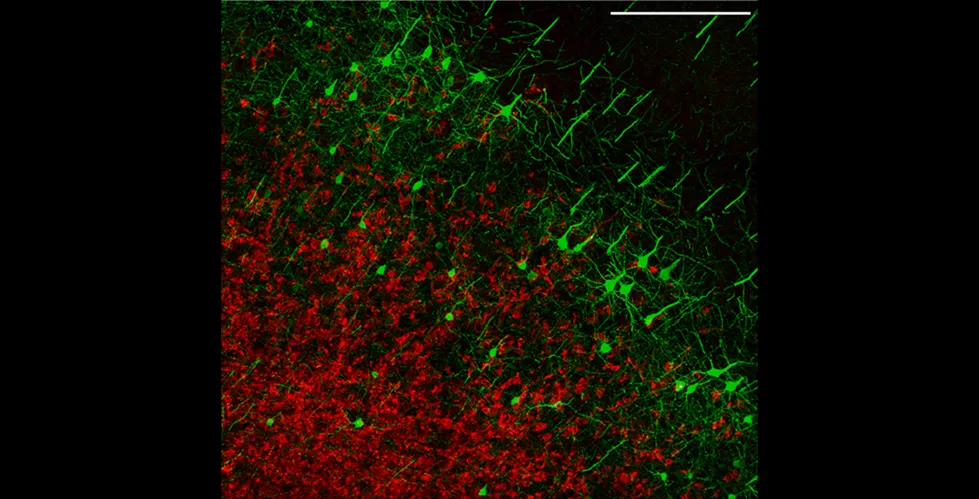
A new study led by Dr. Peter Canoll’s lab, in collaboration with researchers at Columbia University Irving Medical Center, Zuckerman Institute, and Irving Institute for Cancer Dynamics, along with multiple other researchers at other universities, provides novel insights into how gliomas—aggressive brain tumors—cause debilitating neurological symptoms such as seizures and cognitive impairments.
“This study not only highlights the mechanisms driving glioma-induced dysfunction but also shows that key aspects of this damage are rapidly reversible.” (Peter Canoll)
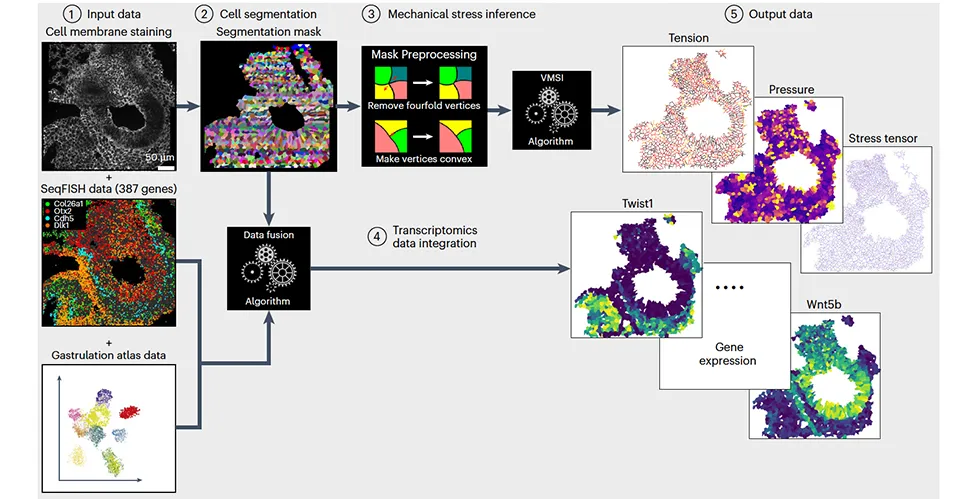
IICD member Dr. Bianca Dumitrascu’s lab published a new study in Nature Methods introducing a computational pipeline that integrates spatial transcriptomics with mechanical force inference. This novel approach provides new insights into how physical forces shape tissue development.
“This framework helps bridge genomics and mechanobiology. It creates a shared language for researchers in both fields, which is critical for understanding complex processes like cancer progression, wound healing, and tissue regeneration.” (Ruiyang He)
Discover this computational pipeline for spatial mechano-transcriptomics.
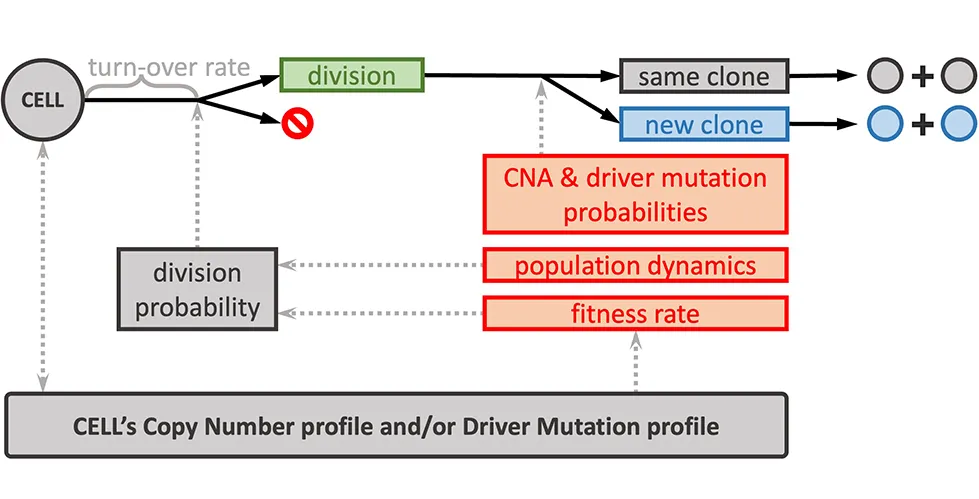
Discover CINner, an innovative computational tool developed by Dr. Khanh N. Dinh, revolutionizing how scientists study chromosomal instability (CIN) in cancer. Published in PLOS Computational Biology, CINner provides deeper insights into how CIN influences the selection of specific cancer types.
“By using a selection model focused on driver gene mutations and focal genomic events, we can also accurately characterize cancers like chronic lymphocytic leukemia, which typically exhibit minimal chromosomal instability.” (Khanh Dinh)
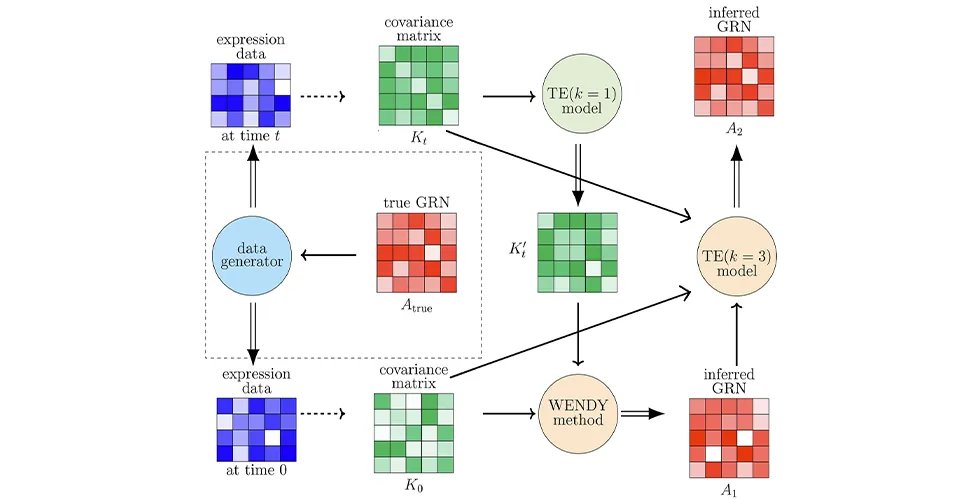
Dr. Yue Wang, Associate Research Scientist at the Herbert and Florence Irving Institute for Cancer Dynamics and the Department of Statistics at Columbia University, has developed a novel approach to improve the accuracy and interpretability of gene regulatory network inference using deep learning. The results were recently published in Bioinformatics.
“When we tested TRENDY against 15 other inference methods, it ranked first in terms of accuracy. What’s even more exciting is that unlike many deep learning models, TRENDY also offers improved interpretability, helping us understand not just what the model predicts, but why.” (Yue Wang)
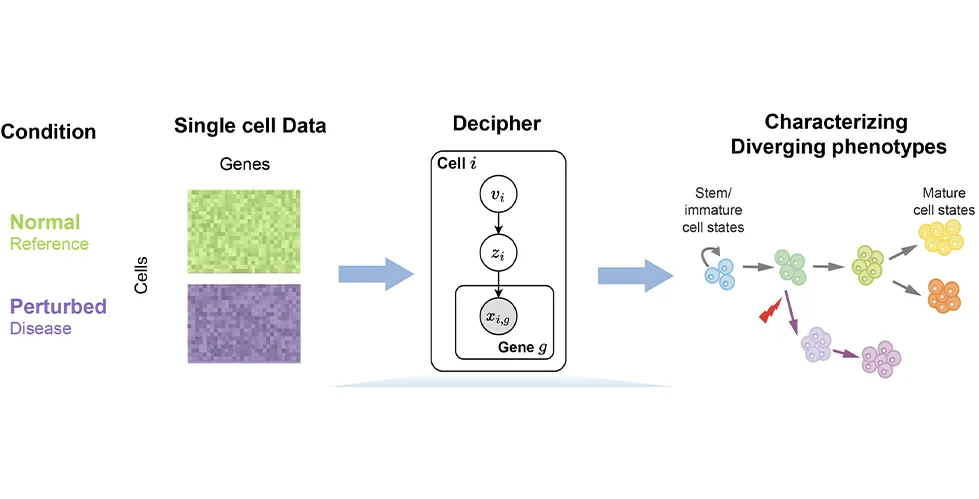
A new study from the Azizi, Pe’er, and Blei labs introduces Decipher, a deep generative model for integrating and visualizing single-cell data across healthy and disease contexts. Published in Genome Biology, this work, led by Achille Nazaret, Joy Linyue Fan, Vincent-Philippe Lavallée, and colleagues, demonstrates how Decipher reconstructs cell-state transitions and reveals disrupted regulatory programs in cancers such as AML, gastric cancer, and pancreatic tumors.
"Decipher introduces a novel hierarchical deep generative architecture that can compare and simultaneously visualize diverging cell trajectories. This powerful approach unlocks new avenues for discovering early disease drivers, developing early-detection biomarkers e.g. for cancer detection, and identifying coordinated disruptions in transcriptional regulation." (Elham Azizi)
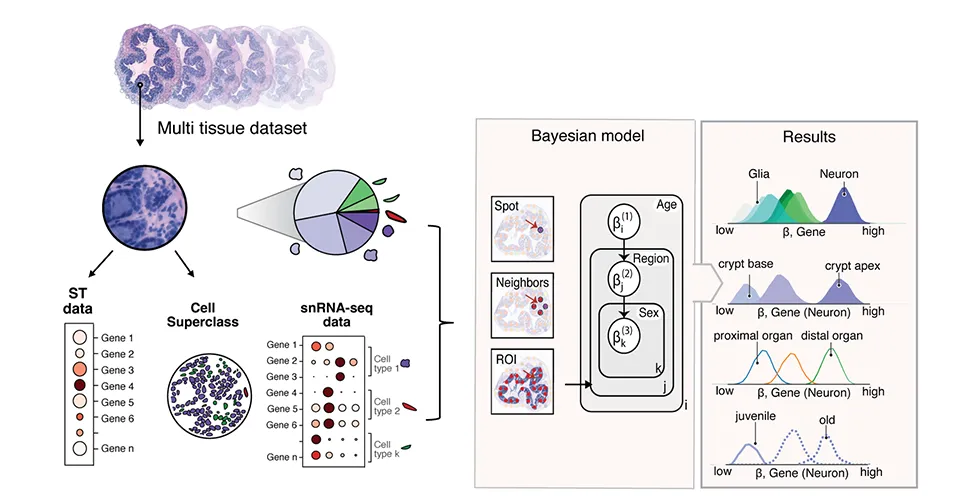
Dr. Sanja Vicković’s lab developed a new computational framework to investigate cell and tissue organization in pathology. Their work was recently published in Nature Biotechnology. This landmark paper presents a comprehensive spatial and cellular atlas of the aging colon, profiling ~1,500 mouse tissues and 400,000 nuclei across 11 age groups.
“Our integrative, multi-modal approach offers a new blueprint for investigating how complex tissues change over time, with broad applications for cancer dynamics and regenerative medicine.” (Sanja Vickovic)
Discover cSplotch.
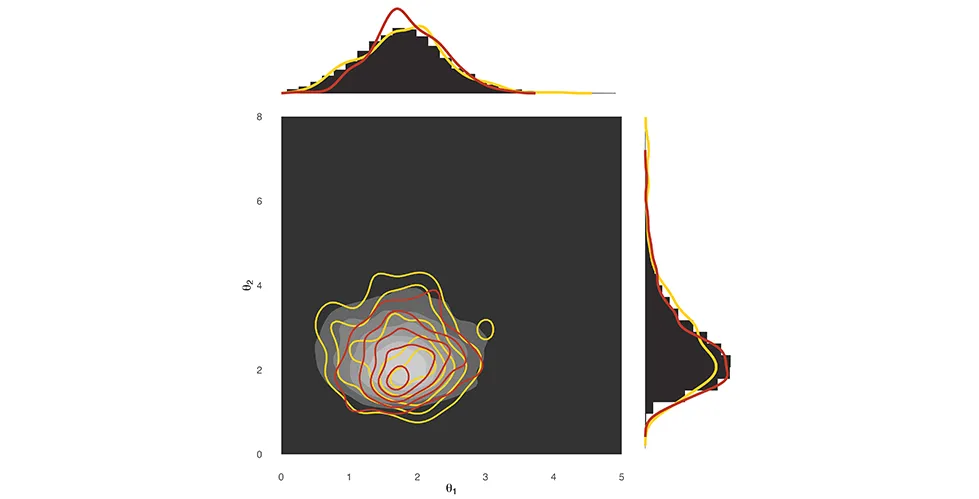
Dr. Khanh N. Dinh’s group has developed a more efficient random forest-based Approximate Bayesian Computation method to enable more reliable and robust mathematical modeling across many fields of science. They share their findings in a new study published in Statistics and Computing.
The need for parameter estimation transcends cancer research or even biology. We expect that ABC-SMC-(D)RF and other RF-based methodologies will be of help for modeling in different scientific areas.” (Simon Tavaré)
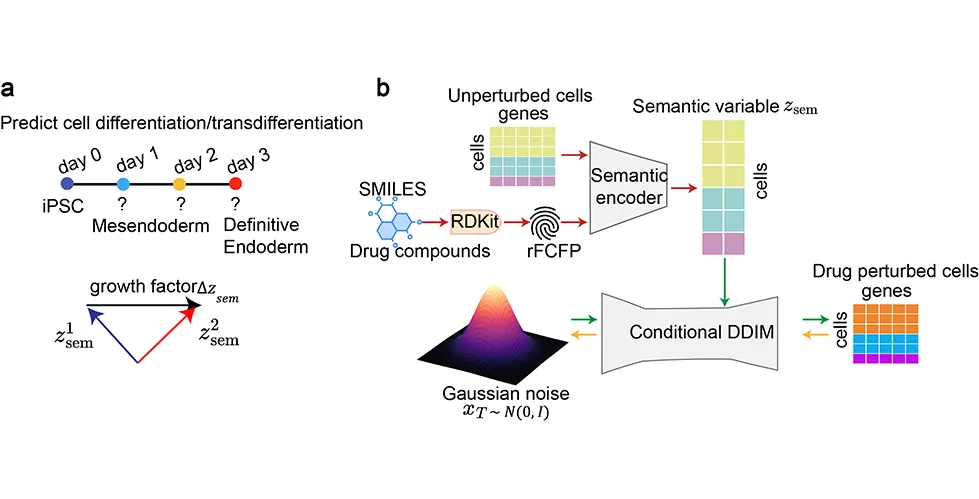
The Azizi and Leong labs at Columbia University and the Zou group at Stanford University have developed a diffusion artificial intelligence model named Squidiff to predict cellular responses to developmental and chemical cues and accelerate precision medicine. Their work was recently published in Nature Methods.
“By bridging AI and molecular biology, Squidiff helps researchers understand the complex rules of cell behavior and accelerate the development of new therapies, especially for heterogeneous diseases like cancer.” (Daniel Naveed Tavakol)
Discover Squidiff.